


Last Updated: August 22, 2026
The most expensive mistake in buying expensive furniture online isn't choosing the wrong piece, it's choosing the right piece for the wrong space. Before you spend a single dollar, measure everything. Your room dimensions, doorways, hallways, and ceiling height all determine whether a designer sofa actually fits through your front door or sits awkwardly in your living room.
Start with a floor plan. Sketch your room to scale, marking windows, doors, electrical outlets, and architectural features. This becomes your reference document. When you're evaluating a piece online, you'll know instantly whether it works. A stunning Normandy dining table at 280cm might be perfect for a formal entertaining space, but catastrophic for a modest kitchen.

Consider scale and proportion carefully. A low-profile armchair works in a room with 2.4m ceilings. That same chair dwarfs a smaller space or feels lost in a grand hall. Photograph your empty room from multiple angles, corners, doorways, the view from your main seating area. These photos become invaluable reference points when you're browsing online.
Lead times matter too. When you're buying expensive furniture online, delivery can take 8-16 weeks for bespoke or imported pieces. If you're furnishing a new home or renovating, understand the timeline before committing. Oscar and Mila's curated collection balances availability with quality, but even premium retailers need time to source and deliver pieces that meet their standards.
Quality in expensive furniture isn't visible in a product photo. It lives in the frame, the joinery, the materials, and the finish. Learning to evaluate construction separates genuine investment pieces from expensive mistakes.
The frame is the skeleton. A solid hardwood frame, kiln-dried to prevent warping, will outlast cheaper alternatives by decades. Look for specific construction methods in product descriptions. Dovetail joinery and mortise and tenon joints indicate craftsmanship. These traditional methods create stronger connections than staples or nails.
Solid wood frames resist the test of time. Veneer over plywood works for some applications, but solid wood is the hallmark of heirloom-quality furniture. When you're evaluating a piece online, ask the retailer directly: "Is the frame solid wood or veneer?" Legitimate luxury retailers will provide detailed specifications. They won't be vague.
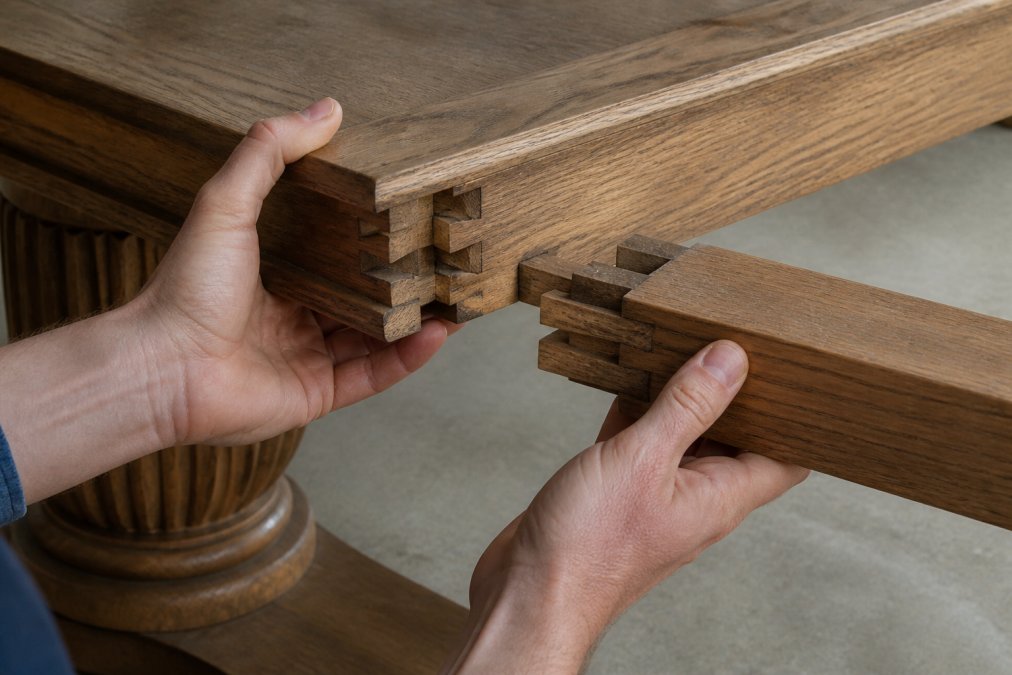
Check for reinforcement. Corner blocks, webbing under cushions, and internal bracing indicate a manufacturer that's invested in durability. These details don't appear in marketing photos, but they're documented in technical specifications. Request these details before purchase.
Fabric durability is measured in rub counts. The Martindale test simulates wear by rubbing fabric against itself thousands of times. A rub count above 15,000 indicates commercial-grade durability; above 30,000 is exceptional. For upholstery on pieces you'll use daily, higher is better.
Ask about material composition. Natural fibres like wool and linen age beautifully but require maintenance. Synthetic blends resist staining but may pill or fade. Leather develops character with use, but lower grades crack and peel. A quality retailer will explain these trade-offs honestly.
Finish quality matters for wood surfaces. Hand-rubbed oil, lacquer, or polyurethane finishes each have different maintenance requirements and longevity profiles. Some finishes age gracefully; others show wear quickly. Understanding what you're getting means understanding how to care for it.
Heirloom-quality furniture transcends trend. It's designed to be repaired, refinished, and passed down. Not every expensive piece qualifies, and some moderately priced pieces do.
True heirloom furniture is built on timeless design, not novelty. A classic silhouette in neutral upholstery will feel relevant in twenty years. Trend-driven pieces, bold colours, unusual proportions, fashion-forward details, date quickly. When you're evaluating expensive furniture online, ask yourself: will this design feel dated in a decade?
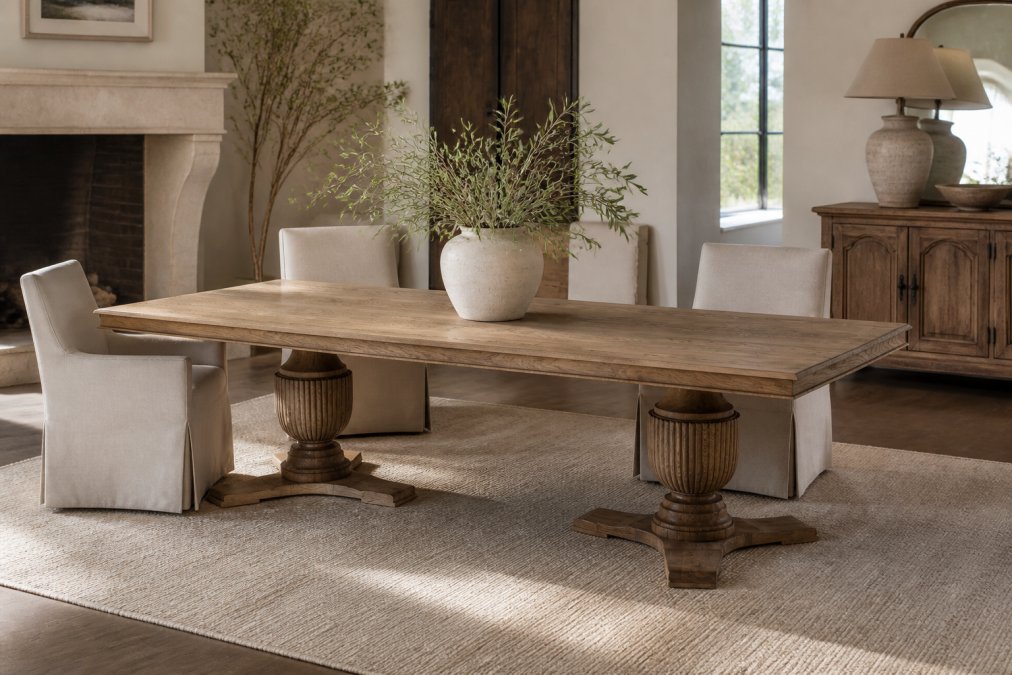
Repairability is essential. Can the frame be re-glued if joints loosen? Can upholstery be replaced without destroying the piece? Are replacement parts available? Heirloom pieces are designed with these questions in mind. Modern fast-furniture is designed for disposal.
Materials matter. Solid wood ages better than veneered particle board. Natural fabrics like wool and linen develop patina. Leather improves with age. These materials are more expensive initially, but they reward time and use.
Construction details signal intent. Hand-stitched seams, solid wood frames, traditional joinery, and quality hardware all indicate a maker who expected the piece to last generations. These details cost more upfront but save money over decades.
Counterfeit designer furniture is a real problem in the luxury market. Authenticated pieces from established retailers like Oscar and Mila carry far less risk than purchasing from unknown sellers, especially internationally.
Verify the retailer first. Authorised dealers are listed on brand websites. If you're buying a Ralph Lauren piece or Visual Comfort lighting, check the brand's official retailer directory. Counterfeiters often operate through marketplace platforms or grey-market sellers offering suspiciously low prices.
Request authentication documentation. Legitimate luxury retailers provide certificates of authenticity, serial numbers, and detailed provenance information. If a seller can't provide this, walk away. Designer brands have specific manufacturing standards, material specifications, and quality marks.
Examine product photography carefully. Counterfeit listings often use stolen images from official brand websites or mix low-quality photos with high-end descriptions. Request additional photos from multiple angles. Ask for photos of labels, stamps, and serial numbers. A legitimate retailer will accommodate these requests without hesitation.
Price is a signal. If a designer piece is selling for 40-50% below market rate, question why. Authorised retailers maintain pricing discipline. Massive discounts often indicate counterfeit stock, grey-market goods, or stolen merchandise.
Australian Consumer Law protects you when buying expensive furniture online. Understanding your rights prevents costly disputes and protects your investment.
The Australian Consumer Law guarantees goods are of acceptable quality, fit for purpose, and as described. For expensive furniture, "acceptable quality" means durability appropriate to the price point. A $5,000 sofa is held to a higher standard than a $500 one.
You have the right to return or refund goods within a reasonable timeframe if they're faulty or not as described. For furniture, "reasonable" typically means 30 days, though this depends on the nature of the fault and whether the item is still usable. Retailers cannot refuse a return simply because you changed your mind, but they can apply restocking fees for returns initiated by the consumer, provided the fee is reasonable and disclosed upfront.
Delivery damage is covered. If furniture arrives damaged, you're entitled to repair or replacement at no cost. Document damage immediately with photos and written notes. Contact the retailer within 48 hours. Don't accept "damaged goods as-is" unless you explicitly choose to.
Custom or bespoke pieces have different protections. Once you've approved a design and ordered a custom piece, you typically cannot return it simply because you changed your mind. However, if the finished piece doesn't match specifications or is faulty, you're still protected.
Request clear return policies before purchase. Reputable retailers publish these upfront. Understand whether restocking fees apply, who covers return shipping, and what condition the piece must be in. These details prevent misunderstandings later.
Buying expensive furniture online requires thinking beyond the purchase price. Consider total cost of ownership: delivery, assembly, maintenance, and potential repairs.
White glove delivery services add cost but protect your investment. For pieces over $2,000, white glove service, which includes setup, positioning, and removal of packaging, is worth the expense. It reduces damage risk and ensures proper assembly.
Calculate maintenance costs. Some materials require professional cleaning. Leather needs conditioning. Upholstery may need protective treatments. Finishes may require periodic refinishing. Budget these into your decision.
Resale value matters for investment pieces. Timeless designer furniture holds value better than trend-driven pieces. A classic Ralph Lauren sofa may retain 60-70% of its value; a novelty piece might drop to 20%. If you think you'll eventually sell the piece, this matters.

Compare cost per year of expected use. A $3,000 sofa expected to last 15 years costs $200 per year. A $1,500 sofa lasting 5 years costs $300 per year. Expensive furniture often offers better value when evaluated over time.
Track warranty coverage. Quality furniture often carries 5-10 year warranties on frame and joinery. Upholstery warranties are typically shorter (2-3 years). Understand what's covered and for how long.
Buying expensive furniture online without seeing it in person requires strategy. Swatches, virtual staging tools, and detailed communication with retailers reduce risk.
Request fabric and finish swatches before committing. A colour that looks perfect on screen may clash with your lighting and décor in person. Legitimate retailers will post swatches at no cost. Take these home, view them in different lighting conditions, and live with them for a few days. Your eye adjusts; your gut reaction matters.
Use virtual staging tools. Photograph your space and use augmented reality apps to visualise furniture placement and scale. These tools aren't perfect, but they're far better than guessing. Many retailers can advise on virtual staging compatibility.
Communicate with the retailer about your space. Provide floor plans, room dimensions, photos from multiple angles, and lighting conditions. The more information you give, the better advice you'll receive. Quality retailers will flag potential issues before you order.
Confirm delivery logistics before purchase. Ask about:
Plan your space preparation. Clear pathways, protect flooring, and arrange for help moving heavy pieces. Expensive furniture requires careful handling.
Most expensive furniture purchases go smoothly. The ones that don't usually involve preventable mistakes.
Skipping measurements. Buying without confirming dimensions is the most common error. A beautiful piece that doesn't fit is worthless. Measure twice, order once.
Ignoring return policies. Some retailers have strict no-return policies on custom pieces. Others charge significant restocking fees. Know the policy before committing.
Underestimating lead times. Bespoke and imported furniture takes time. If you need pieces in 6 weeks, you need to know upfront whether a retailer can deliver. Many cannot.
Choosing style over substance. A trendy piece in a fashionable colour might feel urgent now. In five years, you'll regret it. Invest in timeless design.
Trusting photos alone. Product photography is curated and lit professionally. Your space is lit naturally. Request additional photos, swatches, and samples before deciding.
Overlooking construction details. A low price on a designer-branded piece often means compromised construction. Verify frame materials, joinery methods, and upholstery specifications.
Not understanding maintenance. Some materials require professional care. Others demand regular conditioning. Understand what you're committing to before purchase.
Rushing the decision. Expensive furniture is a long-term commitment. Take time. Sleep on it. Consult with an interior designer if you're uncertain. The piece will still be available tomorrow.
Buying expensive furniture online requires diligence, but it's entirely achievable. Measure your space precisely, verify construction quality, understand your legal protections, and communicate clearly with retailers. When you invest time in the process, you invest in pieces that will serve you for decades.
At Oscar and Mila, we understand that buying expensive furniture online demands confidence. Our curated collection of designer pieces, from Ralph Lauren sconces to timeless outdoor furniture like the Normandy Rectangle Dining Table, combines authenticity, craftsmanship, and transparent detail specifications. Every piece is selected for longevity and design integrity. Whether you're furnishing an interior space with a statement lighting piece or creating an elegant outdoor setting with our California Outdoor Setting, we provide the detailed information and customer support that transforms online shopping into a confident investment. Get started with Oscar and Mila and discover how premium design enhances every corner of your home.

| Consideration | What to Verify | Why It Matters |
|---|---|---|
| Frame and joinery | Solid wood, dovetail or mortise and tenon construction | Determines durability and repairability |
| Material durability | Rub count for fabric, leather grade, finish type | Indicates how well the piece ages with use |
| Authenticity | Retailer authorisation, certificates, serial numbers | Protects against counterfeit designer pieces |
| Delivery logistics | Lead time, doorway fit, assembly requirements | Prevents costly surprises and installation issues |
| Return policy | Timeframe, restocking fees, condition requirements | Clarifies your protections under Australian Consumer Law |
| Maintenance costs | Cleaning requirements, protective treatments, warranty | Factors into true cost of ownership |
A: Start by measuring your space and understanding scale and proportion. Request material swatches to verify colour and texture. Examine product descriptions for frame construction details, joinery methods, and solid wood specifications. Check warranty coverage, return policies, and lead times. Read verified customer feedback carefully. Ask for high-resolution photography showing finish quality and construction. Confirm authenticity certificates for designer pieces. Use virtual staging tools to visualise placement before committing to expensive furniture.
A: Request detailed product specifications covering upholstery, frame construction, and material composition. Ask sellers for close-up photographs of joinery, dovetail joints, and mortise and tenon connections. Inquire about rub count or martindale test results for fabric durability. Check warranty documentation and assembly requirements. Review customer feedback mentioning long-term durability and finish quality. Request swatches for upholstery and veneer samples. Ask about white glove delivery options that include inspection before acceptance. Premium retailers like Oscar and Mila provide comprehensive material information and high-quality imagery for each piece.
A: Heirloom furniture combines solid wood construction with superior joinery techniques like dovetail and mortise and tenon joints. Kiln-dried timber resists warping and cracking over decades. Premium upholstery uses high rub-count fabrics tested to martindale standards. Finish quality must withstand daily use without degradation. Timeless design transcends trends, remaining elegant across decades. Heirloom pieces hold resale value and improve with age. Quality warranty coverage indicates manufacturer confidence in longevity.
A: Under Australian Consumer Law, you have the right to goods that are of acceptable quality, fit for purpose, and match descriptions provided. For expensive furniture, acceptable quality includes durability appropriate to the price paid. If items arrive damaged, you can request repair, replacement, or refund. Return policies and restocking fees must be clearly disclosed before purchase. Sellers cannot exclude liability for major faults. If a piece fails within a reasonable timeframe due to defective construction or materials, you're entitled to remedy. Always retain documentation, photographs of condition upon arrival, and correspondence with the seller.
A: Request authenticity certificates and verify them directly with the brand manufacturer. Check that product codes and serial numbers match official documentation. Examine construction quality, material composition, and finish standards, counterfeits typically show poor joinery and inferior upholstery. Compare product specifications against the brand's official website. Purchase from authorised retailers who can provide provenance documentation. Be cautious of prices significantly below market rates. Ask sellers about their sourcing relationships with designers and manufacturers. Premium retailers like Oscar and Mila work directly with brands like Visual Comfort and Ralph Lauren, ensuring authenticity.
A: Calculate total cost including the piece itself, customization options, white glove delivery, and potential assembly requirements. Factor in long-term maintenance and care costs, premium materials require proper upkeep to preserve finish quality. Set aside a budget for resale value assessment if you might sell later. Compare price transparency across retailers; hidden fees or unclear pricing indicate risk. Consider lead times, as extended delivery may affect project timelines. Assess warranty coverage as part of value, longer coverage periods justify higher investment. Budget for virtual staging tools or interior design consultation to ensure the piece works in your space.
A: Lead times vary significantly by piece and retailer. Stock items may ship within 2-4 weeks, while custom or imported pieces can take 8-16 weeks. Ask retailers specifically about lead times before purchasing, especially if you're working within project deadlines. Premium retailers often provide accurate estimated delivery dates upfront. White glove delivery services may add 1-2 weeks but include damage inspection and professional placement. International pieces from European or Asian designers typically have longer lead times. Confirm lead times in writing and understand any restocking fees if you need to cancel due to delays.
This article was written using GrandRanker
Leave a comment