


Last Updated: August 17, 2026
Counterfeit designer furniture costs legitimate manufacturers and buyers millions annually. When you purchase what you believe is an authentic piece, you're investing in craftsmanship, design heritage, and materials that justify premium pricing. A fake arrives looking similar but deteriorates rapidly, lacks the construction integrity of the original, and holds no resale value.
The problem extends beyond personal disappointment. Buying replicas funds intellectual property theft and organised counterfeiting operations. Equally important, you lose the ability to resell or gift a genuine heirloom-quality piece to the next generation. At Oscar and Mila, we curate only authenticated designer furniture and lighting from premium brands like Visual Comfort and Ralph Lauren, ensuring every piece in our collection meets rigorous authenticity standards.
Spotting fake designer furniture requires understanding how legitimate manufacturers construct pieces, what materials they use, and where to verify provenance. This guide walks you through the forensic inspection techniques that separate genuine craftsmanship from convincing imitations.
The foundation of authentic designer furniture lies in how wood joints are constructed. Genuine pieces use joinery techniques that require skill and time, methods that counterfeiters either skip or execute poorly because they add cost.
Dovetail joints and solid wood indicators
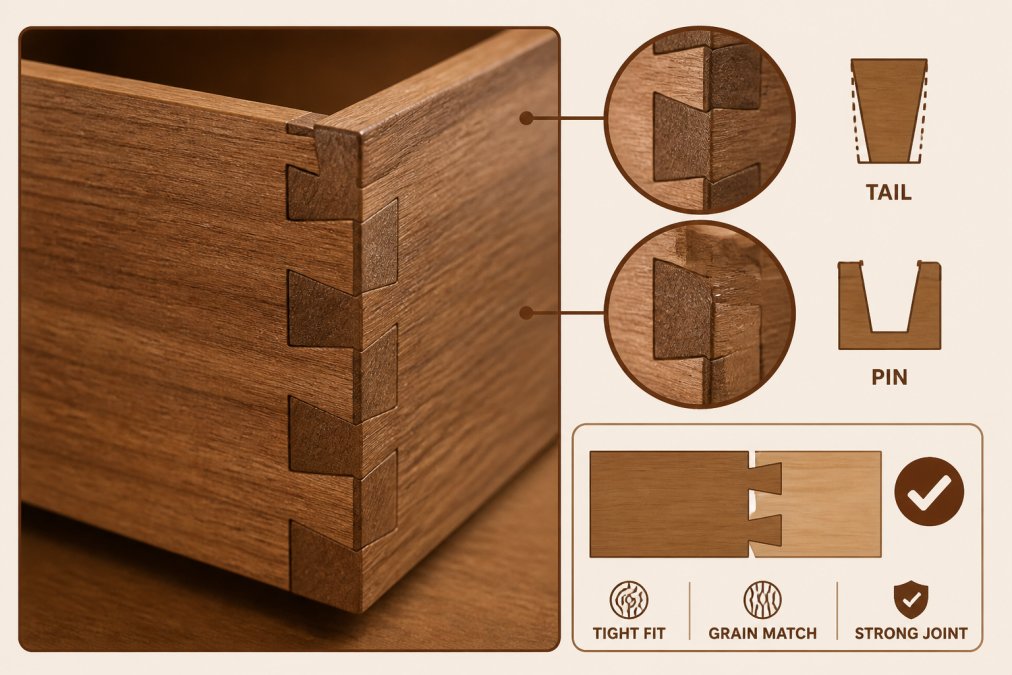
Dovetail joints represent the gold standard in fine furniture construction. These interlocking wood joints create mechanical strength without relying on glue alone, allowing the piece to flex slightly and absorb movement across seasons. When you examine a drawer front or cabinet side on authentic designer furniture, you'll see the distinctive fan-shaped tails and pins, each hand-cut or precision-machined to fit perfectly.
Fake furniture often uses butt joints (simple square cuts glued together) or dowel joints (wooden pegs inserted into holes). These methods are faster and cheaper but far weaker. A drawer constructed with butt joints will eventually separate; dovetail joints, properly made, last centuries.
Run your fingers along the inside edges of drawers and cabinet joints. Authentic dovetails feel precise, with minimal gaps. The wood grain should be continuous across the joint, a sign the pieces were cut from solid stock rather than assembled from veneer scraps.
Solid wood construction is another authenticity marker. Legitimate designer furniture uses full-grain or quarter-sawn solid wood for structural components, legs, rails, frames. Counterfeiters use plywood or particleboard veneered with a thin wood skin. Solid wood weighs more, feels denser, and won't dent or crack as easily. When you lift a piece, weight should feel substantial and distributed evenly.
Veneer versus solid wood construction
Veneer itself isn't a sign of fakery. Many high-end pieces use veneer strategically on panels where solid wood would be unstable, wide tabletops or cabinet sides that span large areas. Veneer allows designers to create stunning grain patterns and use rare wood species efficiently.
The distinction is where veneer appears. Authentic pieces veneer only the panels; structural components remain solid. Fake furniture veneers everything, including areas that should be solid. Check the edges of shelves, tabletops, and chair frames. Solid wood shows natural edge grain. Veneer shows a thin wood layer over substrate material, often you'll see the edge banding attempting to hide the plywood underneath.
Press on veneered surfaces. Authentic veneer sits tight against the substrate with no flex or bubbling. Counterfeit veneer often bubbles, peels, or separates because manufacturers skip proper adhesive and curing time. Run a straight edge across the surface, any waviness indicates poor veneer application.
Material quality separates heirloom-grade furniture from disposable pieces. Counterfeiters cut corners here because material costs directly impact their profit margins.
Full-grain leather authentication
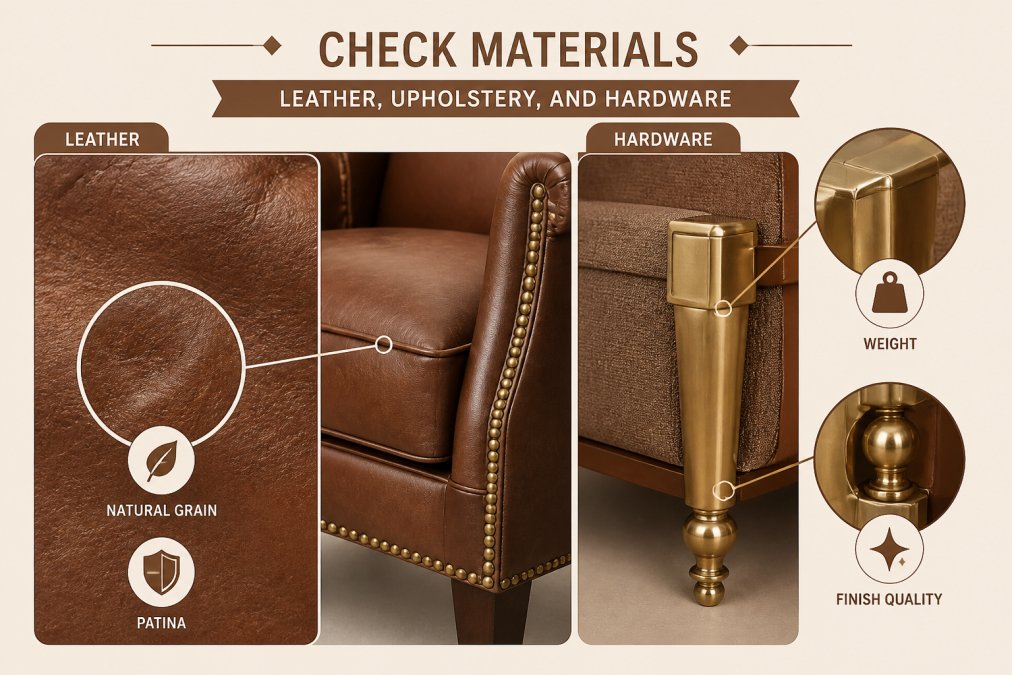
Full-grain leather, the top layer of the hide with the grain pattern intact, is the only leather worthy of designer furniture. It breathes, ages beautifully, and actually improves with use. Genuine full-grain leather shows natural variations: scars, marks, and colour inconsistencies that prove authenticity.
Fake designer furniture uses bonded leather (leather scraps glued to a backing) or PU leather (polyurethane plastic that mimics leather). These materials feel plastic-like and crack within months. Press your fingernail into the leather, full-grain leather will show a slight indentation that fades. Bonded or PU leather either won't indent or will crack.
Smell matters too. Authentic leather has a distinctive warm, natural scent. Fake leather smells chemical or plasticky. This isn't foolproof, but combined with other checks, it adds to the picture.
Check the underside of cushions and where leather meets frame. Authentic pieces show the leather grain continuing naturally. Fakes show seams hiding where cheap leather scraps were joined. Look for consistent stitching patterns, counterfeiters often use cheap thread or inconsistent stitch length.
Hardware weight and finish quality
Hardware, handles, hinges, feet, brackets, reveals authenticity instantly. Designer furniture uses solid brass, bronze, or stainless steel hardware. Counterfeits use zinc alloy or painted pot metal that feels hollow and lightweight.
Pick up a handle or examine a hinge. Authentic hardware feels substantial. Lift the piece slightly by a handle, it should support the weight without flex. Fake hardware bends, creaks, or breaks under stress.
Examine the finish. Solid brass develops a natural patina over time. The finish should be even, with no paint chipping or discolouration. Pot metal hardware often shows paint cracking or flaking because the base metal is unstable. Check inside hinges and under feet where finish is less visible, counterfeits often skip finishing these areas, exposing cheap metal underneath.
Screw quality matters. Authentic pieces use wood screws with consistent, precise threads. Counterfeiters use cheap fasteners that strip easily. Unscrew a hinge or bracket if possible, authentic screws turn smoothly; cheap ones bind or cross-thread.
Legitimate designer furniture comes with documentation proving origin and manufacture date.
Authenticity certificates issued by the manufacturer or designer include specific details: the designer's name, collection name, production year, and often a serial number. Certificates printed on flimsy paper, with vague language, or missing production dates are red flags. Authentic certificates use quality cardstock, precise typography, and specific details you can cross-reference.
Contact the manufacturer directly. Provide the serial number and ask them to verify the piece. Legitimate companies maintain records. If a manufacturer can't find your piece in their database, it's counterfeit. This step alone catches most fakes.
Serial numbers appear on labels, plaques, or stamps inside the furniture. Authentic serial numbers follow consistent formatting, the manufacturer's logo, production year, and sequential number. Counterfeit serial numbers are often poorly printed, inconsistently formatted, or missing entirely.
Research the label format. Does it match examples from that designer's era? A 1990s label shouldn't use modern fonts or printing techniques. Examine the label's placement, authentic pieces position labels consistently. Fakes place labels haphazardly.
Certain construction details reveal counterfeits instantly.
Visible glue, staples, and poor stitching
Authentic designer furniture hides fasteners and adhesive. Staples appear only on the underside of cushions, never on visible surfaces. Glue is applied sparingly and cleaned before drying, no dried drips or excess.
Examine the underside and back of pieces. Visible staples are normal. But staples on the front, sides, or anywhere visible suggest rushed manufacturing. Counterfeiters staple rather than screw or glue properly because it's faster.
Stitching quality reveals craftsmanship. Authentic upholstered pieces have precise, evenly-spaced stitching, typically 6-8 stitches per inch. Stitches are tight and secure. Counterfeit stitching is loose, uneven, or skips sections. Pull gently on seams, authentic stitching holds; fake stitching separates.
Check where upholstery meets wood frame. Authentic pieces use tack strips or hidden staples underneath. The transition is clean and invisible from the front. Fakes show staples, glue drips, or rough edges where fabric was hastily attached.
Uneven paint, distressed finishes, and patina
Distressed finishes on designer furniture are intentional, a design choice that requires skill to execute authentically. Genuine distressing follows patterns. Paint is applied in layers, then strategically worn to show wood or primer underneath. The distressing looks natural, as if the piece aged over decades.
Counterfeit distressing is random and unconvincing. Paint colour is uneven. Wear patterns don't follow the piece's geometry. The finish looks deliberately damaged rather than authentically aged.
Run your hand across the surface. Authentic distressing creates a smooth feel, worn edges are rounded, not sharp. Cheap distressing leaves sharp edges where paint was chipped. Patina on authentic pieces develops gradually; on fakes, it looks painted on.
Check corners, edges, and high-wear areas. Authentic pieces show wear where hands naturally touch or where movement causes friction. Fake pieces show random damage everywhere.
The distinction between replica and original goes beyond aesthetics.
Replica furniture copies the design but not the construction. A replica might have the silhouette of a famous designer chair but uses cheaper materials and shortcuts. Replicas are legal if they don't claim to be originals, they're sold as "inspired by" or "in the style of." Replica prices reflect the cost-cutting: typically 20-40% of the original.
Original designer furniture is manufactured by the designer's licensed company or authorised producers. It uses specified materials, construction methods, and quality standards. Originals cost more because every detail, from joinery to hardware to upholstery, meets the designer's standards. An original holds or appreciates in value; a replica depreciates immediately.
The ethical difference matters. Buying a replica supports the designer's vision being accessible at lower price points, a legitimate market. Buying a counterfeit (a replica sold as original) funds theft and fraud. The distinction is intention and honesty. A retailer selling a replica as a replica is transparent. A retailer selling a counterfeit as authentic is committing fraud.
Resale value reflects this. An authentic designer chair from the 1960s might sell for AUD $4,000-$8,000 at auction. A replica of the same chair sells for AUD $200-$500. A counterfeit masquerading as original might fetch AUD $2,000-$3,000 initially, but when discovered, becomes worthless and potentially exposes the buyer to legal liability.
Australian Consumer Law protects buyers of furniture, including designer pieces.
The Australian Consumer Law guarantees that goods are of acceptable quality, fit for purpose, and as described. If you purchase furniture described as "authentic designer" and it's counterfeit, you have grounds for a refund, replacement, or compensation.
Acceptable quality means the furniture is safe, durable, and free from defects. A chair that collapses after three months or a table that warps within a year fails this standard. You can claim a remedy even if you purchased the item months earlier, provided the fault existed at the time of purchase.
The Australian Competition and Consumer Commission enforces these protections. If a retailer refuses to acknowledge a counterfeit or defective product, you can lodge a complaint. The ACCC investigates systemic fraud, if a retailer is knowingly selling counterfeits, enforcement action follows.
Keep receipts and documentation. Photograph defects. If you suspect a piece is counterfeit, request a refund before accepting it. Retailers selling through platforms like eBay or Facebook Marketplace have less accountability, but the platform itself may intervene if you report fraud.
Understanding a designer's history helps you spot fakes.
Authentic pieces reflect the design language of their era. A mid-century modern chair has specific proportions, materials, and construction techniques consistent with 1950s manufacturing. A fake made in 2020 but sold as 1960s original will have subtle anachronisms, modern adhesives, contemporary fasteners, or finishes that didn't exist in the claimed era.
Research the designer's production timeline. When did they manufacture this design? What materials did they use? Did they license production to other companies? A piece claimed to be a 1970s original but manufactured using techniques unavailable until 1995 is fake.
Visit museum collections and exhibitions. The Powerhouse Museum in Sydney and state museums hold designer furniture collections with detailed documentation. Comparing your piece to authenticated examples reveals construction details you can't fake.
Provenance, the piece's documented history, adds authenticity. A chair with a clear chain of ownership (original buyer → second owner → you) is more likely authentic than one with no history. Ask the seller for documentation. Legitimate dealers maintain records.
Join designer furniture communities and forums. Enthusiasts and experts can often identify pieces from photographs. They'll spot construction inconsistencies or design errors that reveal counterfeits.
For high-value purchases, consider professional authentication. Furniture appraisers and conservators can examine pieces and provide written authentication. This costs AUD $150-$400 but protects significant investments.
Spotting fake designer furniture protects your investment and supports legitimate craftsmanship. The techniques outlined here, examining joinery, verifying materials, checking hardware, and researching provenance, require time but are learnable. Start with obvious checks: weight, construction quality, and documentation. As you develop an eye for authentic craftsmanship, subtler details become apparent.
When sourcing designer furniture, work with retailers committed to authenticity. At Oscar and Mila, every piece in our curated collection undergoes rigorous verification. We partner exclusively with authorised manufacturers and established designers, ensuring you acquire genuine articles with documented provenance. Our selection includes premium lighting from Visual Comfort and furniture from Ralph Lauren Home, pieces chosen for uncompromising craftsmanship and design integrity. Explore our collection and invest with confidence in furniture that will endure and appreciate for decades.
Examine the construction closely: authentic designer furniture features dovetail joints, solid hardwood frames, and hand-stitched upholstery. Check for stamped logos or manufacturer marks on hidden surfaces like the underside or back. Research the designer's production methods and materials online. Counterfeit pieces typically show visible glue, staples, and uneven stitching. If buying from a retailer, verify their credentials and ask about the piece's provenance and where it was manufactured.
Original designer furniture is manufactured by or authorised by the designer, using specified materials, construction techniques, and quality standards. Replicas copy the design but use cheaper materials, inferior joinery, and faster production methods. Original pieces retain resale value and come with documentation; replicas depreciate rapidly and often lack authenticity certificates. Original furniture features heirloom-quality craftsmanship, whilst replicas prioritise cost reduction over durability and longevity.
No. Under the Australian Consumer Law, consumers have protections for goods that are not of acceptable quality or as described. However, purchasing counterfeit goods knowingly may void these protections. If you unknowingly purchase counterfeit furniture, you may have grounds for a refund under consumer guarantees. Always buy from authorised retailers or those with verified provenance. Keep all receipts and documentation. If issues arise, contact the ACCC (Australian Competition and Consumer Commission) for guidance on your consumer rights.
Authentic designer furniture features weighted, substantial hardware with consistent finish. Real brass or bronze hardware feels heavy and develops natural patina over time. Check that hinges, handles, and metal fittings are securely attached and aligned. Counterfeit pieces use lightweight, hollow hardware that tarnishes unevenly or flakes. Inspect the underside and interior mechanisms, fake furniture often has visibly cheap metal components or plastic substitutes painted to look metallic. Authentic hardware should bear maker's marks or stamps.
This article was written using GrandRanker
Leave a comment