


Last Updated: August 23, 2026
Curating unique home decor pieces is the deliberate practice of selecting and arranging distinctive objects that reflect your personal aesthetic whilst creating a cohesive, intentional living environment. At Oscar and Mila, we understand that true curation goes beyond simply purchasing items, it's about understanding how each piece contributes to the overall narrative of your space.
The difference between decorating and curating is fundamental: decorating fills a room, curation tells a story. When you curate, you're making deliberate choices about scale, material, colour, and provenance. A curated collection demonstrates restraint and intention, showing you've thought about why each piece belongs.
The psychology behind curation matters. When your environment reflects your values and aesthetic preferences, it affects how you feel in that space. A room filled with intentionally selected pieces creates a sense of calm and belonging that generic furnishings cannot replicate.
The challenge with sourcing luxury pieces online is authenticity and quality assurance. A reputable luxury home decor retailer should offer transparent provenance information, detailed product descriptions, and clear photography from multiple angles. Oscar and Mila curates pieces from premium brands like Visual Comfort and Ralph Lauren, alongside independent artisans and reproduction specialists, ensuring every item meets exacting standards.
When evaluating an online store, look for these indicators of quality:
The best luxury retailers invest in content that educates rather than just sells, providing context about why a piece matters and how it might work in different interior schemes.
Styling home decor accessories effectively requires understanding composition. Think of your shelves, mantels, and tabletops as gallery spaces. The most common mistake is treating decorative accessories as afterthoughts, filling shelves without considering how objects interact with one another.
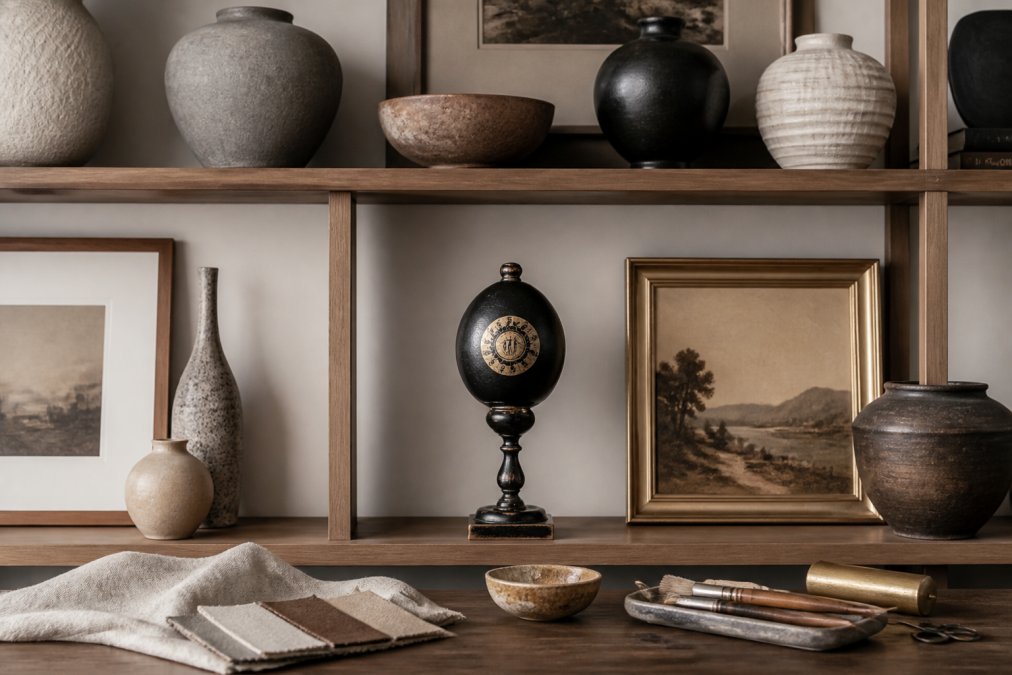
Layering creates depth and visual richness by combining different scales, textures, and materials. A successful layered arrangement includes background elements (wall art, mirrors), mid-ground pieces (shelving, larger objects), and foreground accessories (smaller objects, textiles). Vary the heights and depths of objects to create rhythm. Empty space isn't wasted, it's breathing room that allows each piece to be appreciated individually.
Scale relationships determine whether an arrangement feels harmonious or awkward. Consider the proportions of your furniture and architectural features. In a room with high ceilings and substantial furniture, larger sculptural pieces work well. Within a single display, balance large and small objects. A large ceramic vessel benefits from smaller pieces arranged nearby, creating visual hierarchy.

Proportion also applies to colour and material. If you're introducing a bold sculptural piece in dark materials, balance it with lighter textiles or metals.
Trends come and go, but certain design principles endure because they're rooted in human psychology and aesthetic fundamentals. The current design landscape favours curation over maximalism, reflecting a broader cultural move toward quality over quantity.
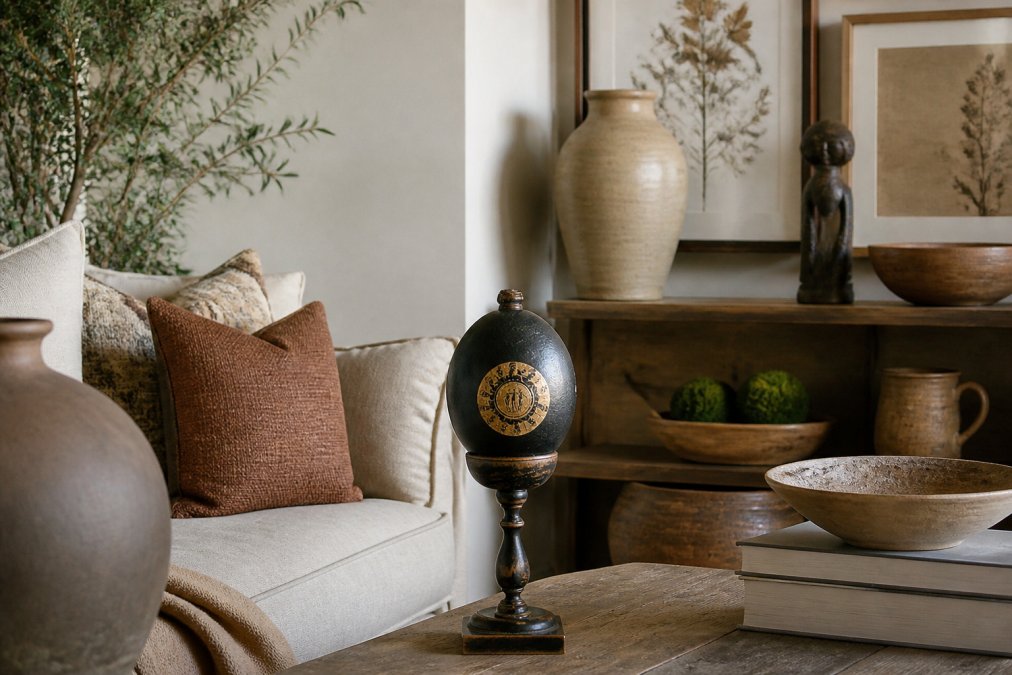
Handmade and artisanal pieces are increasingly valued. A handmade ceramic vessel carries the maker's touch, subtle variations, and individual character that mass-produced items lack. Texture layering remains a cornerstone of sophisticated interiors, combining rough ceramics with smooth metals and soft textiles with hard wood. Lighting design has become a primary design element rather than an afterthought, with premium brands like Visual Comfort elevating lighting to sculptural status. Colour restraint is another enduring trend, with luxury interiors favouring sophisticated palettes and carefully chosen complementary colours that don't date quickly.
Curation doesn't require unlimited spending. The key is understanding where to invest and where to compromise. Invest in pieces you'll live with for years, foundational furniture, quality lighting, statement artwork. Compromise on pieces you might refresh more frequently or that serve secondary functions.
Mix price points intentionally. A room featuring only expensive items can feel cold or overly formal. Introducing more affordable pieces from emerging artisans or vintage markets adds character and prevents the space from feeling like a showroom.
Vintage and reproduction pieces offer exceptional value. A reproduction of a Napoleon III pedestal, such as the Black Ostrich Egg available through Oscar and Mila at $548, provides museum-quality aesthetics at a fraction of authentic antique prices. Consider the cost-per-year metric: a $2,190 sculptural piece you'll display for twenty years costs roughly $110 per year, comparable to replacing mass-produced decor annually.

Build your collection gradually. Rather than furnishing a room completely at once, acquire pieces thoughtfully over time. This approach allows you to understand what you genuinely love and prevents the "decorated all at once" appearance.
Your home environment influences your mood, productivity, and sense of wellbeing more profoundly than most people realise (peer-reviewed research). Colour psychology is foundational: blues and greens create calm, warm tones create comfort and energy, neutrals provide visual rest (apa.org). Texture influences psychological responses, rough, natural textures create authenticity and grounding, while smooth surfaces feel refined.
The concept of "visual weight" affects how spaces feel. Dark, heavy objects feel substantial and grounding; light, airy pieces feel open and spacious. Balance is psychological as well as visual. Personal objects with meaning create emotional connection to your space. A room filled only with designer pieces you don't personally connect with feels hollow.
Spaces that change constantly create cognitive load; spaces that never change become invisible. Strategic rotation of decorative pieces maintains engagement without constant upheaval.
Once you've invested in curated pieces, protecting them ensures they maintain value and beauty. Ceramics and pottery need protection from direct sunlight, which can fade glazes (si.edu). Display them in locations with indirect light or behind glass. Textiles require regular maintenance, rotate throws and cushions to ensure even wear and address stains promptly.
Mirrors and glass benefit from regular gentle cleaning with microfibre cloths. Convex mirrors, like the George IV Style Gilt Framed Convex Mirror available through Oscar and Mila at $1,100, require careful handling to prevent damage to the convex surface. Wooden pieces need protection from extreme temperature and humidity fluctuations. Lighting fixtures require periodic maintenance, dust shades and bulbs regularly to maintain brightness.

Sculptures benefit from occasional repositioning to prevent uneven fading and keep your space visually fresh. Document your pieces with photographs and provenance information. Keep receipts and appraisals, and consider specialised insurance for high-value items.
Curating unique home decor pieces transforms your living space from a decorated room into a reflection of your aesthetic vision. The process requires intention, patience, and a willingness to invest in quality over quantity. At Oscar and Mila, we believe that every piece in your home should earn its place, whether through beauty, function, or meaning. Begin with pieces that genuinely move you, understand the principles of composition and balance, and build your collection thoughtfully over time. Your home will reflect not what you think you should like, but what you authentically value.
The 3-4-5 rule is a styling principle that helps create visual balance when curating home decor pieces. Group items in sets of three (small accents), four (medium pieces like cushions or vases), and five (larger statement items). This approach prevents a cluttered appearance and creates a cohesive, unified impression across your living space. It's particularly effective when styling shelves, mantels, and tabletops with a mix of decorative accessories and sculptural objects.
Build a curated collection by selecting pieces that resonate with your aesthetic and tell your story. Start with a colour palette and design direction, then source artisanal ceramics, handmade textiles, and accent pieces that align with that vision. Mix high-end designer pieces with unique finds from different sources. Focus on quality craftsmanship rather than quantity. Your collection should reflect your personality through bespoke choices and intentional styling, creating a design-led living space that feels authentically yours rather than following trends.
Balance expensive statement pieces with curated finds by using a cohesive colour scheme and unified aesthetic. Place a luxury designer lighting fixture or mirror alongside artisanal ceramics or vintage sculptural objects. The key is intentional layering, let each piece breathe visually. High-end designer brands like Visual Comfort provide anchoring pieces, while unique finds add personality and visual interest. This approach creates an upscale atmosphere without appearing overly matched or sterile, giving your interior decoration genuine character and sophistication.
Purchase from established boutique retailers that specialise in curated, designer pieces and provide detailed provenance information. Verify that the seller stocks recognised premium brands like Visual Comfort and Ralph Lauren directly. Check for authenticity certifications, detailed product descriptions, and high-resolution imagery. Reputable luxury retailers offer transparent information about materials, craftsmanship, and sourcing. Read customer reviews specifically about product quality and authenticity. Boutique online design stores typically have stricter vetting processes than general marketplaces, reducing the risk of counterfeit items.
This article was written using GrandRanker
Leave a comment