


Last Updated: August 21, 2026
Premium outdoor pottery transforms a garden into a curated landscape, anchoring aesthetic vision, defining spatial zones, and creating focal points. Quality pieces withstand temperature fluctuations, UV exposure, moisture cycles, and the weight of soil and mature plants, poor materials fail quickly, while premium materials develop character over time. This guide explores how to select, style, and maintain outdoor pottery that enhances your garden for years to come.
The material determines how well your investment ages, how much maintenance it requires, and whether it survives your climate's seasonal extremes.
Glass Reinforced Concrete (GRC) combines Portland cement with glass fibres, creating strength rivalling stone whilst remaining significantly lighter. GRC resists frost damage, won't absorb excessive moisture, and maintains structural integrity through repeated freeze-thaw cycles. Its versatility allows manufacturers to create intricate designs and refined finishes that would be difficult in traditional terracotta.
The Pietro Stoneware collection demonstrates this capability. Their Anduze Style Urn Medium Plain at 72cm diameter and 78cm height uses advanced cement technology to achieve architectural presence whilst remaining manageable for installation. GRC pieces are heavier than lightweight plastic alternatives but considerably lighter than equivalent stone, which matters for balconies, roof terraces, and spaces where weight distribution affects structural safety.

Glazed ceramic represents the intersection of traditional craftsmanship and modern durability. A proper glaze creates a non-porous surface that prevents water absorption, the primary cause of frost damage in unglazed ceramics (peer-reviewed research). Premium glazed ceramics are fired at high temperatures, which vitrifies the clay and creates a glass-like surface. This labour-intensive process explains why quality glazed pieces command higher prices than mass-produced alternatives.
Glazes offer colour depth, subtle variations, and visual richness that paint-finished surfaces cannot match. Over time, glazed surfaces develop a patina, subtle colour shifts and wear patterns, that adds authenticity without compromising function.
Unglazed terracotta is porous and absorbs water readily. When temperatures drop below freezing, absorbed moisture expands, creating internal stress that causes cracking and spalling. In harsh climates, an unglazed terracotta pot can deteriorate noticeably within a single winter cycle.
Terracotta performs well in mild climates with minimal frost risk, or when positioned under cover, beneath eaves, under pergolas, or on protected patios. For exposed positions in cold climates, sealed or glazed alternatives offer better longevity. If you're drawn to terracotta's warmth and texture, use it strategically in protected microclimates rather than dismissing it entirely.
Pot sizing involves two considerations: what your plants need, and what your space can accommodate.
The relationship between pot size and garden scale determines whether a planter looks intentional or accidentally placed. A single large statement urn in the centre of a small courtyard creates powerful focal impact; that same urn in the corner of a sprawling landscape gets lost.
Start by assessing your space's dimensions and sight lines. Where do you naturally look when entering the garden? Larger pots anchor these focal points. The Aged Bronze Robert Adams Urn and Plinth at $3,120 makes architectural sense in a generous garden or as a statement piece for a significant entry court. For smaller gardens, medium-scale pots like the Anduze urns create presence without dominance. Grouping three pots of varying heights but similar material or colour creates visual interest whilst maintaining cohesion. Odd numbers (three, five, seven) feel more natural than even groupings.

Large pots filled with soil and plants become genuinely heavy. A 72cm diameter urn filled with premium potting mix and a mature specimen plant can weigh 150-200kg. This matters for balconies, roof terraces, and any elevated garden space where structural load is a concern.
Check your building's structural specifications before positioning large pots. Balconies and terraces have weight limits, typically measured in kilograms per square metre. Distributing weight across multiple pots rather than concentrating it in one location reduces point load on the structure. Lightweight materials like GRC help manage this constraint whilst maintaining visual presence.
For ground-level gardens, consider the base surface. Large pots on soft ground can settle unevenly over time, particularly after heavy rain. Positioning large pots on stable surfaces, pavers, concrete, or compacted gravel, prevents settling and maintains your carefully created visual composition.
Contemporary garden design favours clean lines, considered colour palettes, and strategic use of negative space. Outdoor pottery becomes sculptural, selected for its form and how it interacts with surrounding architecture and plantings.
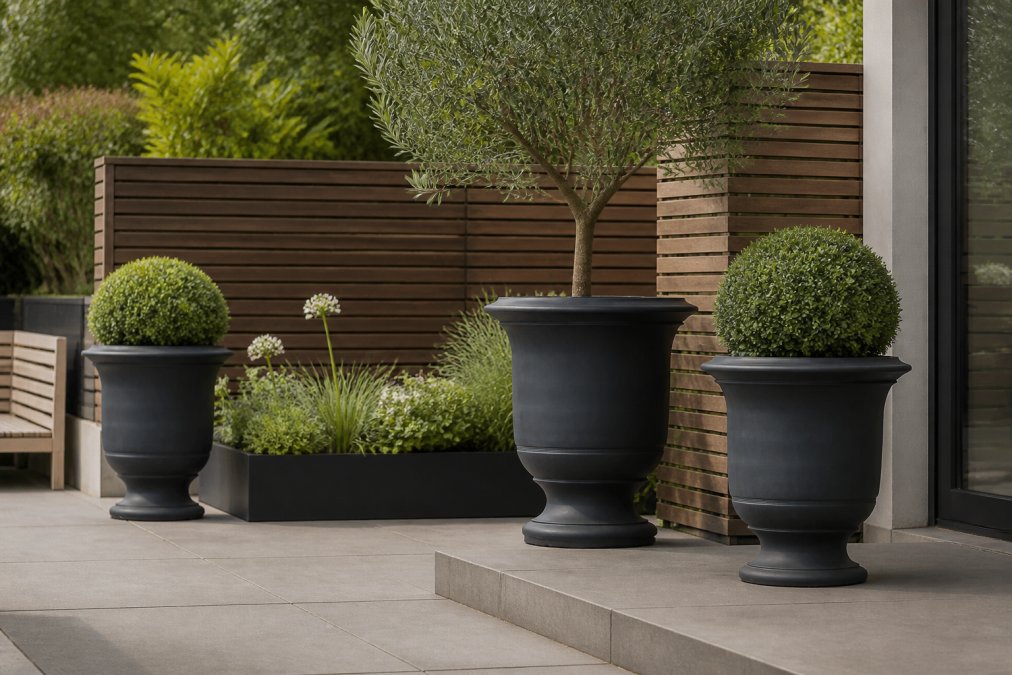
The most effective contemporary gardens treat large pots as architectural elements rather than afterthoughts. A substantial urn positioned against a rendered wall becomes a focal point that anchors the entire space.
Monochromatic colour schemes create visual calm. Using pots in neutral tones, warm greys, soft bronzes, weathered charcoal, allows plantings and architectural elements to command attention. When you do introduce colour through pots, make it purposeful, perhaps a series of identically-coloured pots creating rhythm, or a single accent piece that draws the eye to a specific garden zone.
A single large pot creates stronger impact than several medium ones. Position one substantial urn as a focal point, then build the surrounding garden around it. Asymmetrical arrangement feels more contemporary than formal symmetry, offset pots, vary heights and sizes, and suggest intentional curation rather than decorative convention.
Contemporary homes increasingly blur the boundary between interior and exterior living. Outdoor pottery can reinforce this transition, creating visual continuity between spaces. Select pots that echo materials, colours, or design languages visible inside.
The transition zone, the immediate outdoor space visible from inside, deserves particular attention. Pots positioned here should feel like deliberate extensions of your interior design rather than garden afterthoughts. This is where premium outdoor pottery truly justifies its investment.
Even the finest outdoor pottery fails if the basics of potting are neglected.
Drainage holes are non-negotiable. Every pot requires drainage; water must exit freely. Standing water creates root rot and ultimately plant death. If using a pot without drainage holes, use it as a cache pot, placing a properly-draining pot inside it.
Soil composition matters significantly. Standard garden soil compacts when confined to a pot, restricting drainage and root development. Use premium potting mix specifically formulated for containers. For large pots, fill the bottom 10-15cm with coarse gravel or broken pottery shards to create an air space that facilitates drainage and prevents soil from compacting against the pot's base.
Water management requires attention to seasonal conditions. In summer, large pots may need daily watering; in winter, moisture requirements drop dramatically. Feel the soil regularly, it should be moist but not waterlogged.
Premium outdoor pottery is built to last decades, but requires maintenance to age gracefully.
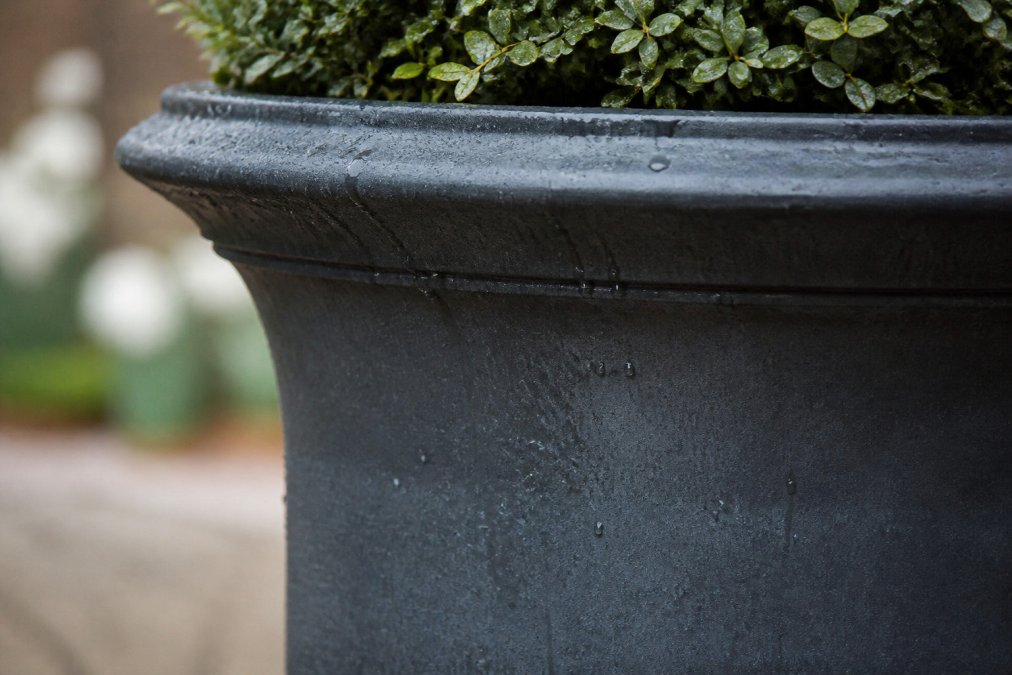
Seasonal inspection prevents small issues from becoming major problems. Before winter, check drainage holes for blockages and clear debris. If you're in a region with harsh winters, consider whether pots need protection or relocation to sheltered areas.
Glazed surfaces require minimal maintenance, occasional cleaning with water removes dust and debris. Avoid abrasive cleaners that can scratch the glaze. For accumulated algae or lichen, gentle scrubbing with a soft brush and water usually suffices.
For pots containing perennial plantings, refresh the top 5cm of soil annually. Remove the old soil carefully, then replace it with fresh potting mix. This replenishes nutrients and prevents salt accumulation. For seasonal plantings, completely replace the soil between seasons.
Monitor the pot's structural integrity. Small cracks don't necessarily require action, but significant damage warrants consideration. A qualified professional can assess whether repair is worthwhile or if replacement is more practical.
Purchasing premium outdoor pottery online requires confidence that what arrives matches what you've selected. Reputable retailers provide detailed product information, clear imagery from multiple angles, and transparent policies regarding delivery and returns.
Oscar and Mila specialises in curated premium outdoor pottery for discerning homeowners and design professionals. Their collection includes pieces from Pietro Stoneware, known for advanced cement technology and architectural design excellence. The Anduze Style Urn Medium Plain at $1,485 delivers substantial presence and proven durability. The Striated Anduze Style Urn Medium at $1,760 adds hand-finished detailing that develops character over time. For architectural statement pieces, the Aged Bronze Robert Adams Urn and Plinth at $3,120 and Large Willingham Urn and Plinth at $2,825 create powerful focal points.

When purchasing online, verify that detailed product specifications are provided, dimensions, weight, material composition, and finish details. Reputable retailers include high-resolution imagery showing the pot from multiple angles and in context. Confirm that the retailer offers appropriate shipping methods for fragile items and that insurance is included. Understand return policies before purchasing; premium outdoor pottery is typically final sale due to shipping costs, but reputable retailers will address genuine damage or defects.
Premium outdoor pottery represents an investment in your home's aesthetic and your garden's functionality. By understanding materials, sizing appropriately, and styling thoughtfully, you create outdoor spaces that reflect your values and enhance your daily life. The pieces you select now will develop character and patina over decades, becoming part of your home's story. Start with Oscar and Mila's curated collection and experience how premium outdoor pottery transforms your garden into a refined, enduring outdoor living space.
Glass Reinforced Concrete (GRC) and advanced stoneware offer the best durability for harsh conditions. These materials resist frost, UV damage, and temperature fluctuations without cracking or fading. Glazed ceramic finishes provide additional weather protection compared to unglazed terracotta. Look for products specifically rated as frost-proof and UV-resistant when buying premium outdoor pottery online.
Match pot size to both your plant's root system and your garden's visual scale. A pot should be 1-2 centimetres larger in diameter than the root ball. For statement pieces in large gardens, oversized urns (70+ centimetres) create architectural impact. Consider weight too, heavier materials like stone are better for permanent placement, while lighter GRC works for balconies. Drainage holes are essential regardless of size.
Glazed pots retain moisture longer and resist weathering, making them ideal for outdoor use in variable climates. Unglazed terracotta is more porous, allowing soil to dry faster, useful for plants that prefer drier conditions but requiring more frequent watering. For premium outdoor pottery, glazed finishes offer superior longevity and aesthetic appeal, maintaining colour and finish through seasons of exposure.
Contemporary designs favour clean lines and neutral finishes, consider statement urns in grey or bronze tones. Classical architecture pairs well with hand-finished, ornamental pieces. Look for pottery that echoes your home's material palette: if your property features stone, choose stoneware; if it has modern cladding, select geometric forms. Grouping pots in odd numbers (3 or 5) and varying heights creates visual harmony while maintaining cohesion with your interior design.
This article was written using GrandRanker
Leave a comment