


Last Updated: August 12, 2026
Selecting timeless furniture for investment requires pieces that function excellently while retaining or appreciating in value over decades. Most furniture depreciates immediately; investment-worthy pieces do the opposite. The difference comes down to three factors: design philosophy, material integrity, and construction quality.
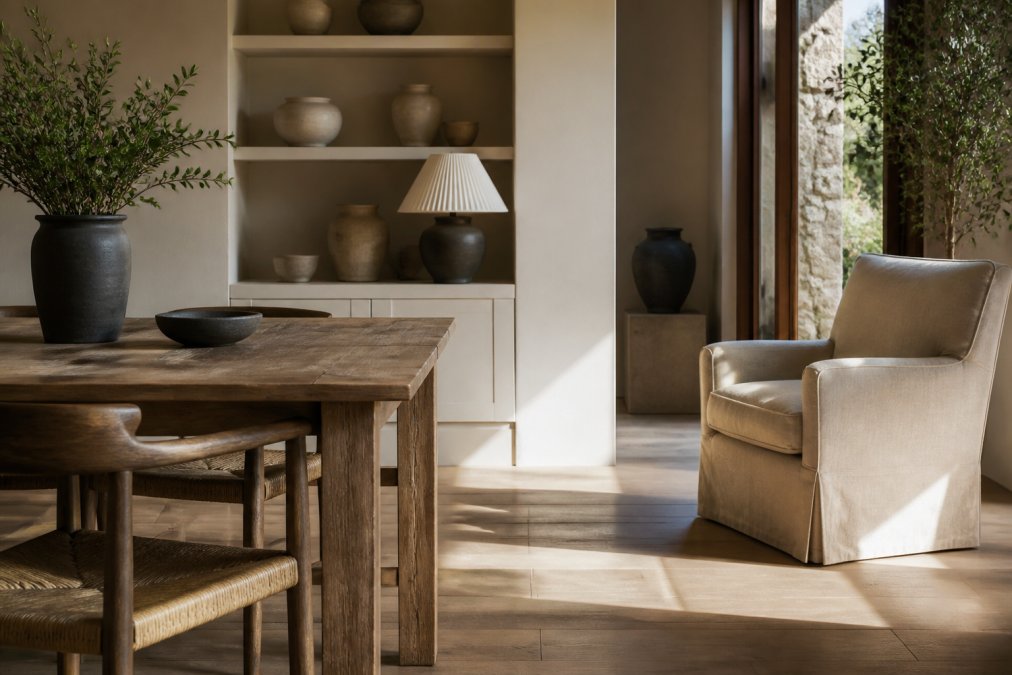
Timeless design resists obsolescence through classic silhouettes, clean lines, and minimalist sensibility. A Shaker-style cabinet, Chesterfield sofa, or Tulip table remain relevant across generations because their proportions are sound regardless of current trends. Fast furniture mimics investment pieces at lower cost but dates quickly and rarely survives a second decade.
A practical test: ask whether the piece would look out of place in a photograph taken thirty years ago. If the answer is no, the design has staying power.
Material integrity is non-negotiable. Solid hardwoods such as oak, walnut, and teak can be sanded, refinished, and restored without structural compromise. Brass and bronze hardware, natural stone surfaces, and full-grain leather upholstery age gracefully rather than deteriorating. Full-grain leather develops a patina that enhances character over time.
Prioritise pieces where the primary material is natural, secondary materials are complementary, and no element has been chosen purely to reduce production cost.
Quality furniture construction is identifiable through specific, observable details that distinguish heirloom-grade pieces from mass-produced counterparts. Understanding what to look for gives serious buyers a decisive advantage.
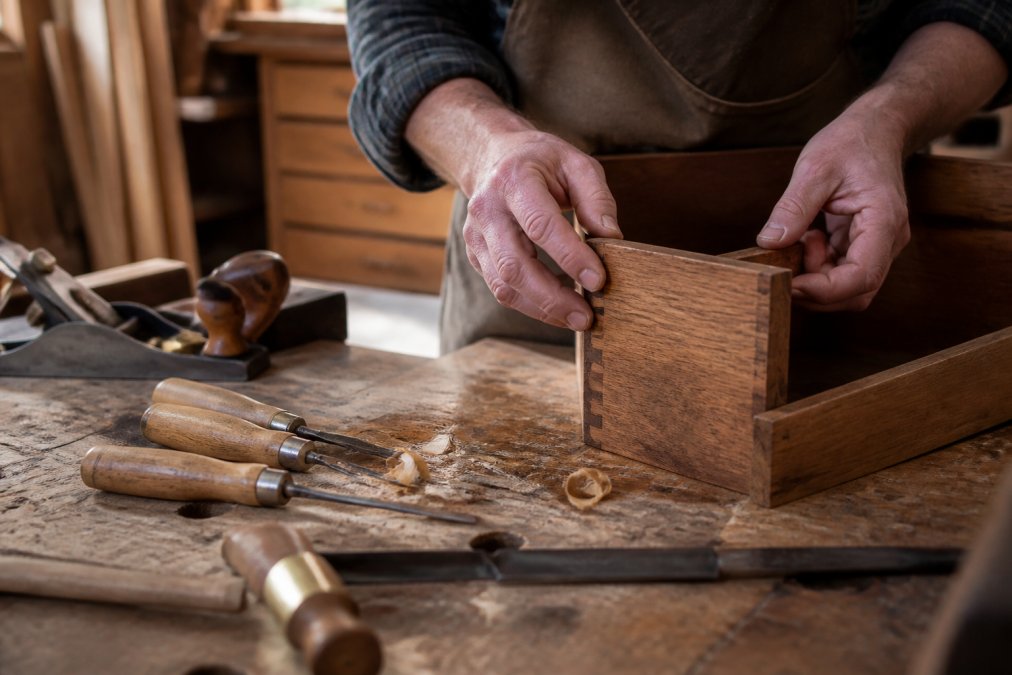
According to The Furniture Industry Research Association's guidance on construction standards, joinery technique is one of the most reliable indicators of long-term structural integrity.
Evaluate furniture by its bones, not its surface finish. A beautifully lacquered exterior can conceal stapled joints, particle board substrates, and hardware that will fail within years.
Dovetail joints in drawers interlock mechanically without relying on adhesive alone, distributing stress across a larger surface area. Mortise-and-tenon joinery in chair and table frames creates connections that strengthen under load. Check the underside of chairs and tables for glue blocks at corner joints, indicating understanding of diagonal stress reinforcement. Drawer slides should operate smoothly without lateral play, and drawer boxes should be constructed from solid timber or high-quality plywood rather than MDF.
The frame beneath fabric is the first consideration: kiln-dried hardwood frames resist warping and cracking. Eight-way hand-tied spring systems distribute weight evenly and maintain tension across decades; sinuous springs compromise long-term performance.
High-density foam wrapped in down or fibre provides the combination of support and softness that characterises durable seating. Natural fibres including linen, wool, and cotton velvet offer superior breathability and ageing compared to synthetics. Performance fabrics suit high-use applications, but natural textiles remain preferred for pieces intended to hold aesthetic value long-term.
Investment-worthy furniture performs best in environments built on spatial harmony, proportion, and curated selection. These principles create conditions in which individual pieces are properly appreciated and valued.
The capsule wardrobe approach applied to interiors produces coherent rooms without rigidity. Select a small number of genuinely excellent pieces that work together across multiple configurations rather than filling a room with individually adequate but collectively incoherent items.
A capsule home collection typically anchors around three to five furniture staples per room: primary seating, a central table, storage, lighting, and one statement piece. Every additional element should serve a clear functional purpose or add visual interest the core pieces cannot provide. This discipline forces better decisions and produces spaces with genuine spatial harmony.
Room |
Core Investment Staples |
Secondary Elements |
Statement Piece |
|---|---|---|---|
Living room |
Sofa, coffee table, shelving |
Side tables, cushions |
|
Dining room |
Dining table, dining chairs |
Sideboard, rug |
Pendant light |
Bedroom |
Bed frame, bedside tables |
Dresser, mirror |
Upholstered headboard |
Study |
Desk, task chair |
Shelving, storage |
Floor lamp |
Neutral colour palettes extend design longevity. Warm whites, stone, greige, and deep charcoal create backgrounds that allow furniture to read clearly and adapt to changing accessories without wholesale replacement. A sofa in a strong trend colour becomes dated when that colour falls out of favour; the same sofa in a considered neutral remains relevant across multiple decorating cycles.
Spatial harmony comes from proportion as much as colour. Furniture scaled correctly to the room with adequate circulation space and clear visual hierarchy creates environments that feel resolved rather than assembled.
Not all designer furniture retains value equally. The secondary market rewards specific characteristics: documented provenance, limited production, design authorship, and verifiable material quality. Understanding which brands consistently command resale premiums helps buyers make more informed selections.
As documented in 1stDibs' annual luxury resale market report, mid-century modern pieces and heritage European designs consistently attract the strongest secondary market demand, often returning significant proportions of their original purchase price decades after manufacture.
Heritage pieces have documented design history: works by named designers, produced by manufacturers with traceable lineage, often with original production records or certificates of authenticity. These occupy a different market category from even high-quality contemporary furniture, because their value is partly historical.
The secondary market for heritage furniture is active and increasingly accessible. A mid-century Scandinavian dining set in original condition, a Knoll or Herman Miller piece with verified provenance, or a hand-crafted bespoke piece from a known maker can command prices that meet or exceed original cost adjusted for inflation.
Buyers who retain original purchase receipts, designer certificates, and care records consistently achieve better resale outcomes than those who cannot substantiate a piece's history.
The secondary market for designer furniture includes significant volumes of unlicensed reproductions, some produced with sufficient quality to deceive uninformed buyers. The most reliable verification methods are:
Certain furniture categories demonstrate consistent investment performance across decades.
The designer chair is the single most investment-worthy category. Chairs designed by architects and industrial designers occupy a unique position: they are simultaneously functional objects, design artefacts, and cultural references. Their small footprint makes them adaptable to changing configurations, and their design authorship makes them verifiable and desirable on the secondary market.
Solid wood dining tables represent investment measured in generations. A well-constructed table in durable hardwood with honest joinery and considered form will outlast every other piece in a home.
Statement lighting is underrated. Lighting from heritage manufacturers, particularly hand-blown glass pendants and architecturally considered ceiling pieces, holds value and significantly influences perceived quality of surrounding elements. Oscar and Mila's curated collection includes lighting from Visual Comfort and Ralph Lauren, manufacturers whose pieces consistently appear in high-value projects and retain relevance across design cycles.
Upholstered seating from quality manufacturers represents the category where construction quality most directly determines long-term value. A well-constructed sofa or armchair, properly maintained, will outlast several generations of mass-market alternatives.
The true cost of ownership is rarely the purchase price. Maintenance requirements, restoration costs, and consequences of deferred care all contribute to the total financial picture.
Solid timber furniture requires periodic conditioning with appropriate oils or waxes and protection from direct sunlight. Properly maintained solid timber can be professionally restored to near-original condition at a fraction of replacement cost.
Upholstered pieces require professional cleaning every two to three years for regular-use pieces and prompt stain treatment. Reupholstery of a quality frame is almost always more economical than replacement, allowing owners to update fabric while retaining investment in frame and construction.
According to the Australian Furniture Association's guidance on furniture care and longevity, properly maintained quality furniture can retain structural integrity for fifty years or more, making per-year ownership cost considerably lower than repeated replacement of inferior pieces.
A quality piece maintained correctly over twenty years costs less in total than three cycles of mid-range replacement furniture covering the same period.
The intersection of designer furniture and modern technology presents a challenge for investment-minded buyers. The principle for preserving investment value is keeping technology integration reversible. A dining table with cable management cut into the apron remains a dining table when technology changes. A sofa with permanently integrated charging becomes obsolete when standards shift.
Bespoke joinery and cabinetry offer elegant solutions: technology infrastructure built into room architecture rather than furniture itself. This allows furniture to remain furniture with design integrity and resale value intact while the technology layer adapts.
For lighting, fixtures designed around specific proprietary bulb types carry hidden obsolescence risk. Fixtures compatible with standard fittings and independently controllable through standard dimmer systems retain value regardless of which smart home platform dominates. Investment-grade pieces should be evaluated on design and material merit independent of technology they currently accommodate.
The challenge for most homeowners is knowing which pieces will earn their place over decades rather than seasons. Oscar and Mila's curated collection brings together heritage brands like Visual Comfort and Ralph Lauren alongside carefully selected pieces chosen for craftsmanship, material integrity, and design longevity. For clients who want spaces that hold their value and appeal, explore the Oscar and Mila collection and select pieces built to last.
Timeless furniture shares several consistent traits: classic silhouettes that don't rely on seasonal trends, durable materials such as solid wood or top-grain leather, and quality construction built to last decades. Pieces with clean lines, neutral finishes, and functional forms tend to remain relevant across shifting interior design styles. Heirloom quality and heritage craftsmanship are the clearest signals — if a piece could sit comfortably in a room from 30 years ago or 30 years from now, it qualifies as timeless.
Well-made designer furniture from established heritage brands generally holds its value better than fast furniture. Pieces with verified provenance, original documentation, and intact craftsmanship attract strong interest on the secondary market. Condition, authenticity, and the brand's design legacy are the primary value drivers. Iconic chairs, solid wood dining tables, and bespoke lighting from respected designers can appreciate over time, particularly when maintained correctly and stored with care. Selecting timeless furniture for investment means treating these pieces as long-term assets, not disposable décor.
Ask whether the piece's appeal depends on a current colour cycle, a seasonal material, or a specific cultural moment. Trend-driven furniture often features unusual proportions, novelty finishes, or colours that feel dated within five years. Investment-worthy pieces rely instead on proven proportions, neutral palettes, and material integrity that transcends cycles. A useful test: if you can find the same silhouette in design archives from the 1950s through to today, it has demonstrated design longevity worth backing.
Solid hardwoods — including oak, walnut, and teak — are the benchmark for furniture longevity due to their structural stability and restorability. Top-grain or full-grain leather upholstery ages gracefully and can be conditioned and repaired. Solid brass and brushed stainless steel hardware resist corrosion and maintain their finish. Avoid furniture built from MDF, particleboard, or bonded leather, as these materials degrade quickly and cannot be restored. Material integrity is one of the clearest indicators of whether a piece will last a generation or a few years.
This article was written using GrandRanker
Leave a comment