


Last Updated: September 16, 2026
Learning how to style luxury living rooms with natural materials starts with restraint, not accumulation. A neutral base of bone, sand, clay and warm greige lets raw timber, stone and linen carry the room. This guide from Oscar and Mila distils the approach our stylists return to again and again.
A neutral base is not a stylistic preference; it is a mechanism. Raw materials carry their own colour, movement and irregularity, and a saturated wall or patterned floor competes with that. When the shell is quiet, the eye reads the veining in a marble top or the slub in a linen weave as the focal point, which is what separates a considered room from a busy one.
Work the palette in three tiers so the room has hierarchy rather than flatness:
The organic modern register is now well established, but not every trend within it serves a luxury room:
Before you commit to a base, ask whether the palette would still look expensive with the furniture removed. If the answer is yes, the shell is doing its job. If the room only works because of the objects in it, the base is too weak to carry the natural materials you plan to layer on top.
Texture layering is how you mix textures in interior design without the room turning busy. The rule is simple: vary the surface, keep the colour. A woven jute rug, a linen upholstered sofa, a raw timber side table and a stone accent can all sit in the same neutral family and still feel rich.
| Layer | Material Example | Role in the Room |
|---|---|---|
| Soft | Linen upholstery, wool throw | Comfort, sound absorption |
| Hard | Marble, travertine, clay | Weight, patina, reflection |
| Woven | Rattan, jute, cane | Warmth, organic rhythm |
Most guides stop at 'soft, hard, woven'. In a luxury room, texture is governed by four variables, and you should vary at least three of them across any surface grouping:
Texture is only visible when light rakes across it. A flat, front-on light source flattens every surface in the room, which is why a scheme that looks rich in a photograph can look dull in person. Two practical rules:
A luxury room has one texture that leads and the rest that support it. If the marble is the hero, keep the timber quiet and the textiles plain. If the linen is the hero, let the stone recede to a honed, low-contrast finish. The mistake is treating every surface as a feature, which is what tips a room from layered to busy.
A neutral living room with a linen sofa, a travertine coffee table, a jute rug and a rattan armchair already has the three weights. To lift it into luxury territory, add sheen contrast (a brushed brass lamp base), scale contrast (a chunky wool throw against the fine linen), and directional contrast (a timber side table with vertical grain against the horizontal weave of the rug).

The right natural materials for luxury living rooms balance weight, warmth and longevity. Stone and timber anchor a space; rattan and jute soften it. The mistake most people make is treating these as a single category when they behave very differently over time.
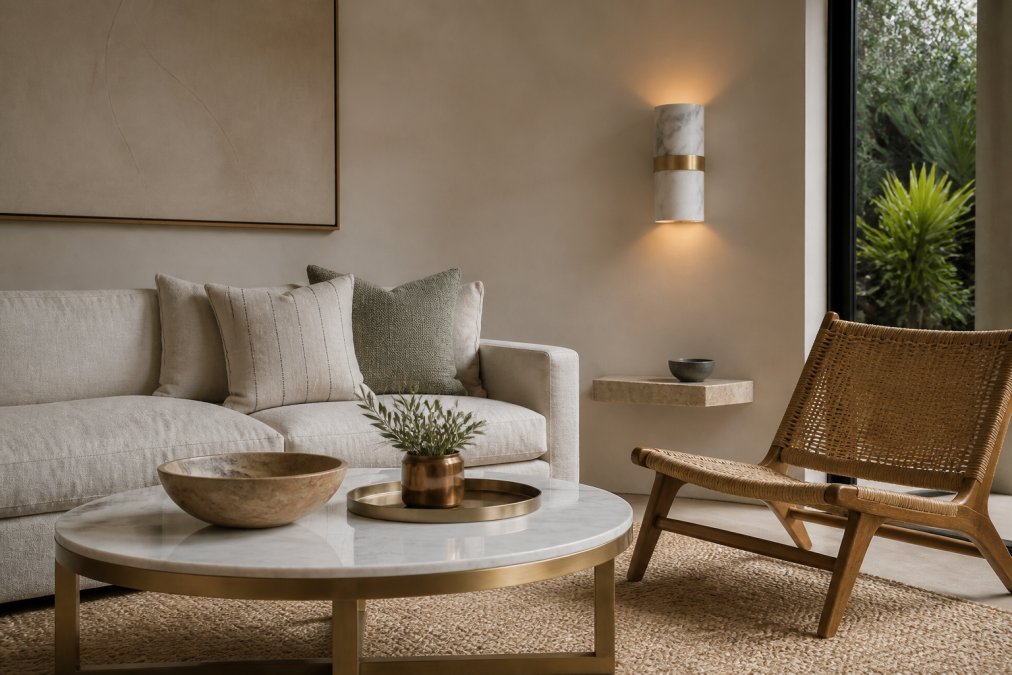
Marble and stone give a living room its sense of permanence. A natural stone top develops patina with use, and no two pieces are identical, which is precisely the point. The Ludwig Marble and Brass Coffee Table, for example, sets a Vitoria marble top on a brass-toned iron frame, and the contrast between cool stone and warm metal is what makes it work.
Timber, rattan and jute introduce warmth without visual noise. Keep the finish raw or oiled rather than high-gloss, and let one woven element lead. A single rattan chair beside a linen sofa does more than a matched set of woven pieces, which quickly tips a room toward coastal cliché.
Natural textures only reveal themselves under the right light. Flat, overhead lighting kills the depth in linen, marble and timber; layered light restores it. Build three layers: ambient for the room, task for reading, accent for the surfaces you want to draw the eye toward.
Mixing natural materials with high-end finishes is where a room moves from pleasant to considered. Raw timber against polished brass, honed stone against brushed metal, linen against lacquer: the tension between rough and refined is the whole effect. Without a polished counterpoint, natural materials can read rustic rather than luxurious.
The best luxury home decor online stores are the ones that can tell you where a piece came from and how it was made. Ethical luxury means traceable materials, documented makers and honest lead times, not a sustainability badge on a product page.
Maintenance is the part most guides skip, and it is where natural materials either age beautifully or fail early. Marble, timber and linen all reward a small, consistent routine.
Balance comes from contrast in weight and finish, not from matching everything. Pair a heavy marble coffee table with a lighter linen sofa, then add one or two polished or brass accents to keep the room from feeling rustic. Limit raw timber and rattan to two or three pieces per room so each material reads as intentional. A neutral base palette of earthy tones and off-whites lets the natural grain, veining and woven textures do the talking without competing.
Marble, travertine, raw timber, linen, jute, rattan and clay are the core materials for a luxury living room with an organic modern feel. Natural stone brings weight and a one-of-a-kind patina, while linen upholstery and jute rugs soften the space and absorb sound. Rattan and woven elements add texture layering without bulk. Choose pieces where the material is the feature, such as a marble-topped table or a linen-shaded lamp, rather than items that merely mimic the look.
Biophilic design connects a room to nature through materials, light and sightlines. In a luxury living room, that means using raw timber, stone accents and natural fibers, maximising daylight, and framing views to greenery or an indoor-outdoor flow. Add a living plant or a sculptural branch arrangement in a clay vessel for a sensory experience. The goal is serenity and well-being, not a jungle, so keep the palette restrained and let two or three natural references carry the room.
Build texture in three layers: a base (jute or wool rug, linen sofa), a mid layer (woven throw) and a top layer (marble or ceramic object). Vary scale as well as material, so a chunky knit sits beside a smooth stone surface. Keep colours within a neutral palette so the eye reads texture rather than pattern. Three to five distinct textures per seating zone is usually enough for a curated, timeless aesthetic.
Styling a luxury living room with natural materials is a discipline of restraint: fewer pieces, better materials, and light that reveals them. Oscar and Mila can help you build that room, with a curated selection of designer furniture, lighting and decor, premium pieces from Visual Comfort and Ralph Lauren, and options for both interior and exterior spaces. Get started with Oscar and Mila and furnish a living room that ages with grace rather than following a trend.
Leave a comment