


Last Updated: September 7, 2026
Choosing luxury home lighting is about creating a layered composition of light, shadow, and sculptural form that defines how a space feels from morning to night. It is a discipline that balances aesthetic instinct with practical physics, and getting it right transforms a house into a home of genuine sophistication. At Oscar and Mila, we curate designer lighting from houses like Visual Comfort and Ralph Lauren, and we believe that the most successful rooms start with a strategy, not a shopping spree.

Most homeowners begin by falling in love with a single chandelier. That is a mistake. The best interiors are built by layering ambient, task, and accent lighting to create depth, and the fixture you adore should anchor that plan, not dictate it. Below, we will walk you through a complete framework for selecting lighting that feels intentional, from scale and colour temperature to finishes and installation, so your investment performs as beautifully as it looks.
The first step in choosing luxury home lighting is to map every activity that happens in the room, then assign a lighting role to each one. Walk through your space at different times of day and note where you read, entertain, cook, or simply pass through, because each function demands a different quality of illumination.
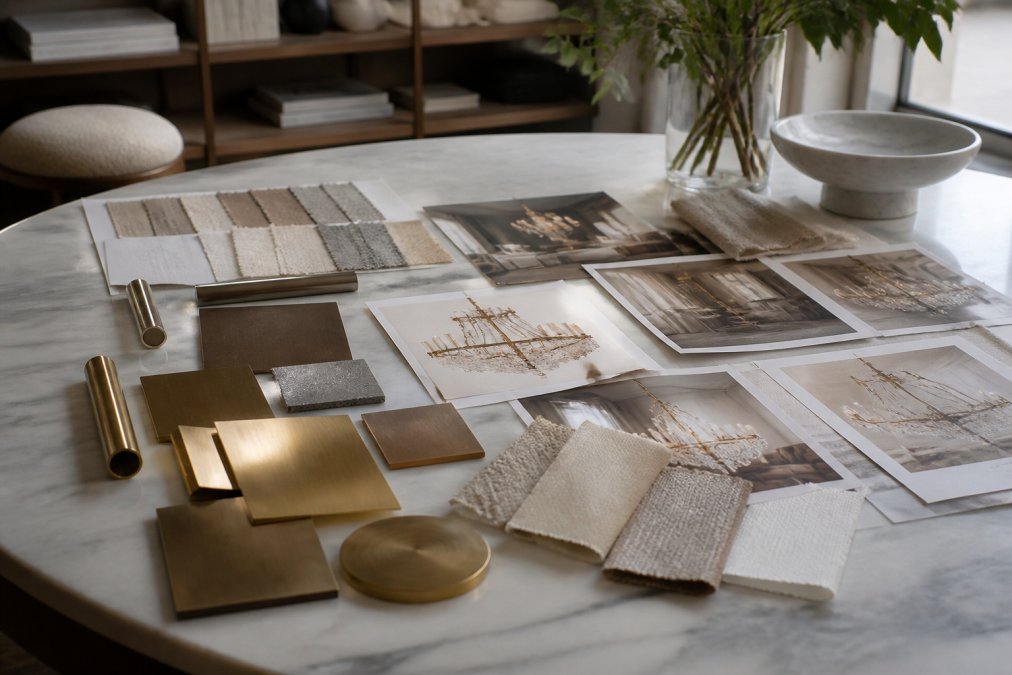
A common mistake is treating lighting as decoration rather than infrastructure. Before you browse a single pendant, sketch a rough floor plan and mark the focal points, circulation paths, and task zones. This plan becomes your brief, and it prevents the expensive error of buying a statement piece that fights the room's architecture.
To layer lighting in a luxury home effectively, you must design three independent circuits, ambient, task, and accent, that can be controlled separately and combined to create scenes. The mistake most homeowners make is treating these layers as a checklist rather than a choreography of light and shadow.
Ambient light is your base layer. In luxury interiors, this rarely comes from a single central fixture. Instead, it is built from cove lighting, recessed downlights on a separate zone, or wall washers that bounce light off plaster or limewash finishes. The goal is an even, shadow-free foundation set at roughly 40-60% of its maximum output during evening hours.
Task light is the functional layer, and in a luxury home it should be positioned with ergonomic precision. A reading chair requires a floor lamp whose shade bottom sits at eye level when seated, typically 100 to 120 centimetres from the floor, so the light falls on the page, not into your eyes. A kitchen island benefits from mini-pendants spaced 75 to 90 centimetres apart, centred over the work surface. A dressing table needs paired sconces flanking the mirror at 150 centimetres from the floor, casting even light across the face without shadows.
Accent light is where luxury homes separate themselves, and the technique matters more than the fixture. Picture a picture light positioned so its beam hits the canvas at a 30-degree angle, reducing glare from the glass. An uplight grazing a textured stone wall should sit 15 to 30 centimetres from the surface to reveal the material's depth. A sculpture lit from two opposing directions gains dimensionality that a single source flattens.
The final layer is decorative light, the chandelier or pendant that functions as jewellery. It should be on its own circuit so you can enjoy it unlit during the day and dimmed to a glow at night, independent of the ambient layer.
Layering also means planning for the vertical plane. A room lit only from above feels flat; introduce mid-level sources such as table lamps and floor lamps to create pools of light at different heights. The most successful luxury interiors have at least three light sources operating at different elevations in every seating area.
When choosing statement chandeliers for dining rooms, the fixture should hang so its bottom sits roughly 75 to 85 centimetres above the table surface. This height allows for unobstructed conversation while keeping the light source close enough to flatter faces and illuminate the table setting.
The shape of the chandelier should mirror the table. A linear fixture, such as the Amber Lewis Griffin Grande Linear Chandelier, suits a long rectangular table, while a circular or tiered design works best over a round one. For a sculptural yet soft presence, the Visual Comfort AERIN Benit Sculpted Chandelier offers graceful lines that read as art even when unlit.
Consider the light direction. An uplight chandelier, like the Paloma Contreras Comtesse XL Up light Chandelier, casts a gentle glow toward the ceiling, creating a warm, diffused ambience that flatters a dining room without harsh glare on the table below.

Scale is the most common reason a beautiful fixture looks wrong in situ, and it comes down to simple geometry. A general rule is to add the room's length and width in metres, then convert that sum to centimetres for the ideal chandelier diameter, so a 4 by 5 metre room suits a fixture around 45 to 50 centimetres wide.
Ceiling height changes everything about fixture selection. For ceilings under 2.7 metres, choose flush or semi-flush mounts to avoid crowding the sightline, while a grand two-storey foyer can carry a dramatic tiered piece like the Visual Comfort AERIN Cristol Tiered Chandelier, which draws the eye upward and fills the vertical void.
The designer lighting brands Australia homeowners rate most highly are those that combine authentic craftsmanship with a distinct design voice. Its portfolio includes collaborations with celebrated designers like AERIN, Amber Lewis, and Paloma Contreras, each bringing a recognisable aesthetic that reads as intentional rather than generic.
When sourcing these pieces, authenticity matters as much as aesthetics. Reputable retailers provide clear provenance and product specifications, which is essential given the prevalence of knock-offs in the premium market. The AERIN Mollino 40" Chandelier, with its plaster white bowl and antique brass finish, exemplifies the kind of signature piece that carries a designer's credibility.

The finish of a fixture dictates how it interacts with light, but in luxury lighting, material choice also determines longevity, maintenance burden, and how the piece ages. Understanding these trade-offs separates an informed purchase from an expensive regret.
Brass is the most enduring luxury finish, but its behaviour depends on the treatment. Polished and lacquered brass retains its mirror shine with minimal care, wipe with a soft dry cloth only, as abrasive cleaners will breach the lacquer and cause uneven oxidation. Unlacquered brass, prized by traditionalists, will patina naturally over months, developing a deep, mellow tone that cannot be replicated artificially. If you want the aged look, buy unlacquered and let time do the work; if you want consistency, choose lacquered.
Hand-blown glass diffuses light with a softness that machine-made shades cannot match, but it demands respect. Each piece is unique, with subtle variations in thickness and tone that become part of its character. Clean glass shades every two to three months using a microfiber cloth and a solution of warm water with a drop of mild dish soap, never alcohol-based cleaners, which can cloud certain glass formulations. When handling, support the base of the shade, never the neck.
Nickel and chrome offer cooler, more contemporary reflections. Brushed nickel reads as softer than polished chrome and hides fingerprints better, making it practical for high-traffic powder rooms. Satin brass, a middle ground, has grown in popularity for its ability to bridge traditional and modern interiors.
Matte black and bronze finishes absorb light rather than reflect it, which means the fixture itself recedes and the lamping becomes the story. These finishes suit dramatic, sculptural pieces where the silhouette matters more than the gleam.
Light colour temperature is measured in Kelvin, and the luxury standard is warmer than most homeowners expect. For living rooms, dining rooms, and bedrooms, specify 2700K, this matches the warm glow of traditional incandescent bulbs that most designer fixtures were originally conceived around (energy.gov). For kitchens and bathrooms where task clarity matters, 3000K provides a crisp but still warm light. Avoid anything above 3500K in a luxury residential setting; it reads as commercial and flattens the warm tones in timber, brass, and skin.
Matching finishes to architectural style is where many guides stop short. In a traditional or transitional interior, polished brass and crystal read as authentic. In a modern or industrial space, matte black, smoked glass, and unlacquered bronze provide the right tension. For a coastal or Hamptons-style home, satin brass and natural woven shades reinforce the relaxed elegance. The fixture should converse with the architecture, not shout over it.
Finally, consider the lamping strategy before you commit to a fixture. Many luxury chandeliers are designed for multiple small bulbs, candelabra bases at 40W equivalent, which creates a glittering, multi-point light source. If you prefer a cleaner look, specify a fixture that accepts a single larger bulb, but understand that the character of the light will change entirely. Always confirm the maximum wattage and whether the fixture is dimmable before installation.
The defining luxury lighting trend for 2026 is a return to sculptural, architectural forms that function as art when switched off. Organic shapes, textured plaster finishes, and mixed materials like leather and bronze appear across the most compelling new collections from [Visual Comfort(/products/visual-comfort-aerin-cristol-tiered-chandelier)'s design collaborations | visualcomfort.com], signalling a move away from minimalist anonymity toward pieces with a point of view.
Ignore the trend toward oversized industrial barn lights in formal spaces; they fight the proportion of a refined interior. Similarly, be wary of integrated LED fixtures that cannot be serviced, as they become landfill when the diode fails. Instead, choose fixtures that accept standard bulbs, which allows you to update colour temperature and maintain the piece over decades.
Before installation, confirm your electrical plan supports dimming on every lighting circuit, as this single upgrade provides the most control over ambience for the least cost. Professional installation by a licensed electrician is non-negotiable for statement chandeliers, particularly for heavier pieces that require appropriate ceiling support, and this is a matter of safety as much as aesthetics. Guidance from Standards Australia on electrical installations underscores the importance of compliant wiring.
Maintenance is the detail most owners overlook. Dust collects on horizontal surfaces and glass shades, dulling the light output, so plan to clean fixtures every few months using a soft, dry cloth and the correct cleaning solution for the finish. For brass that has been lacquered, avoid abrasive cleaners that strip the protective coating, and always switch off the circuit before handling any component.
The 5'7" rule refers to the ideal height for hanging a pendant or chandelier above a floor surface, such as a foyer or hallway. When choosing luxury home lighting, this measurement ensures the fixture sits at eye level, making a graceful statement without obstructing sightlines. For dining rooms, the rule shifts: hang the fixture 75-90 cm above the tabletop. Always measure from the floor or table surface, not the ceiling, to get the proportion right.
Designer lighting from brands like Visual Comfort differs from standard fixtures in three ways: materials, construction, and finish. Designer pieces use solid brass, hand-blown glass, and plaster rather than plated metals or acrylic. The joinery is cleaner, the shades are hand-sewn, and the finish is applied in layers. These details affect how light refracts and how the fixture ages. A designer chandelier can last decades, while a standard fixture often needs replacing within a few years.
Start with ambient lighting for overall illumination, then add task lighting for reading or food preparation, and finish with accent lighting to highlight art or architectural details. In a luxury home, each layer should be on a separate dimmer switch so you can adjust the mood throughout the day. Use warm white bulbs around 2700K for living spaces. The goal is to create pools of light that draw the eye, rather than flooding a room with uniform brightness.
Sculptural plaster finishes and hand-blown glass are defining luxury lighting in 2026, moving away from polished chrome toward softer, organic textures. Uplight chandeliers that cast light toward the ceiling are popular for creating a warm, diffused glow. Energy-efficient LED-compatible fixtures are now standard in designer ranges. What to ignore: overly complicated smart lighting systems that date quickly and single-purpose fixtures you cannot dim or adapt to different occasions.
Match the fixture's personality to the architecture, not the current furniture trend. A traditional home with high ceilings suits a tiered crystal or brass chandelier. A modern space calls for sculptural plaster or linear fixtures with clean lines. Consider the finish: antique brass suits warm palettes, while bronze works with cooler greys. If you are unsure, choose a fixture with classic proportions and a timeless finish like brass, which adapts as your decor evolves.
Visual Comfort is the benchmark for designer lighting, with collections designed by AERIN, Amber Lewis, and Paloma Contreras. Ralph Lauren lighting also offers refined, classic fixtures. In Australia, Oscar and Mila curates these international brands, offering access to pieces that are otherwise difficult to source locally. When selecting a brand, look for solid brass construction, hand-applied finishes, and a signature collection that indicates the designer's direct involvement.
Choosing luxury home lighting is a layered process of planning, proportion, and material honesty, and the reward is a home that feels composed at every hour. At Oscar and Mila, our curated collection of Visual Comfort and Ralph Lauren pieces brings authentic craftsmanship and timeless design to Australian homes, with signature chandeliers and pendants that anchor a room with confidence. Explore our lighting range to find the piece that completes your interior vision.
Leave a comment