


Last Updated: October 4, 2026
Walk through any home that feels genuinely expensive and you will notice something before you can name it: the surfaces respond to you. Timber warms underfoot, stone holds the cool of the morning, plaster softens light.
Discerning homeowners are moving away from synthetic finishes that photograph well and toward materials with provenance, patina and a lighter environmental footprint. Natural materials are essential in a luxury home because they deliver three things synthetics cannot: tactile richness, longevity, and a measurable lift in resale appeal.
The strongest natural choices for luxury interiors are timber, stone, clay and bamboo, each offering a distinct mix of warmth, durability and visual character. Timber is the most versatile, working as flooring, joinery, beams and furniture.
What separates a good specification from a great one is how these materials meet. A solid timber table against a honed stone floor, with clay-rendered walls behind, creates a layered composition no single material can achieve alone.
Timber most clearly separates a considered interior from a flat one. A solid timber dining table looks better in year ten than in year one, if finished correctly.

We recommend pieces finished with a low-gloss lacquer for everyday resilience, such as the Colonnade Round Dining Table 140cm, handcrafted from solid old mango timbers. Timber is a natural product with knots, uneven colour and surface variation, not faults, but evidence a human made the piece.
Stone and clay give a room weight and quiet. Both are cool to the touch, age gracefully, and hide the marks of daily life better than polished synthetics.
As a styling accent, natural stone also brings sculptural presence. A Set of 3 Sandstone Spheres in graduated sizes, from 10cm to 20cm, adds a hand-turned, timeworn texture to a console or dining setting without competing with the architecture.

Sustainable materials for home design are responsibly sourced, low in embodied carbon, and durable enough to avoid replacement. The third criterion is the one most guides overlook: a material needing replacement every decade carries a far heavier environmental cost than one installed once and maintained for fifty years.
This is the case for whole-of-life thinking. When you compare a natural timber floor against a synthetic alternative, the relevant question is not upfront cost but total cost across the life of the home, including refinishing, replacement and disposal.
A useful comparison rests on four inputs, and most homeowners consider only the first.
A common pattern: the natural option costs more upfront and less over thirty years, while the synthetic option is the reverse. The crossover point depends on how long you keep the home and how heavily the material is used.
Ask the supplier for the material's origin and, where available, a documented environmental product declaration.
Ask how the material is finished and refinished, not just how it is installed.
Ask what happens at end of life: can it be repaired, re-used or recycled, or does it go to landfill?
Ask for realistic maintenance intervals in your climate, not a generic figure.
Renewable materials: timber and bamboo from certified, replanted sources
Recycled materials: salvaged oak and reclaimed stone with existing character
Low-processing materials: clay, lime and raw stone that require minimal manufacturing energy
The Panama Extension Dining Table is a good example of the first category, handmade in a salvaged European oak finish with a synchronized butterfly extension that moves from 2.8m to 3.4m.

Natural stone and timber interiors work best when one material leads and the other supports. The most common mistake is treating every surface as a feature, which produces visual noise rather than luxury.
Colonnade Round Dining Table 140cm →
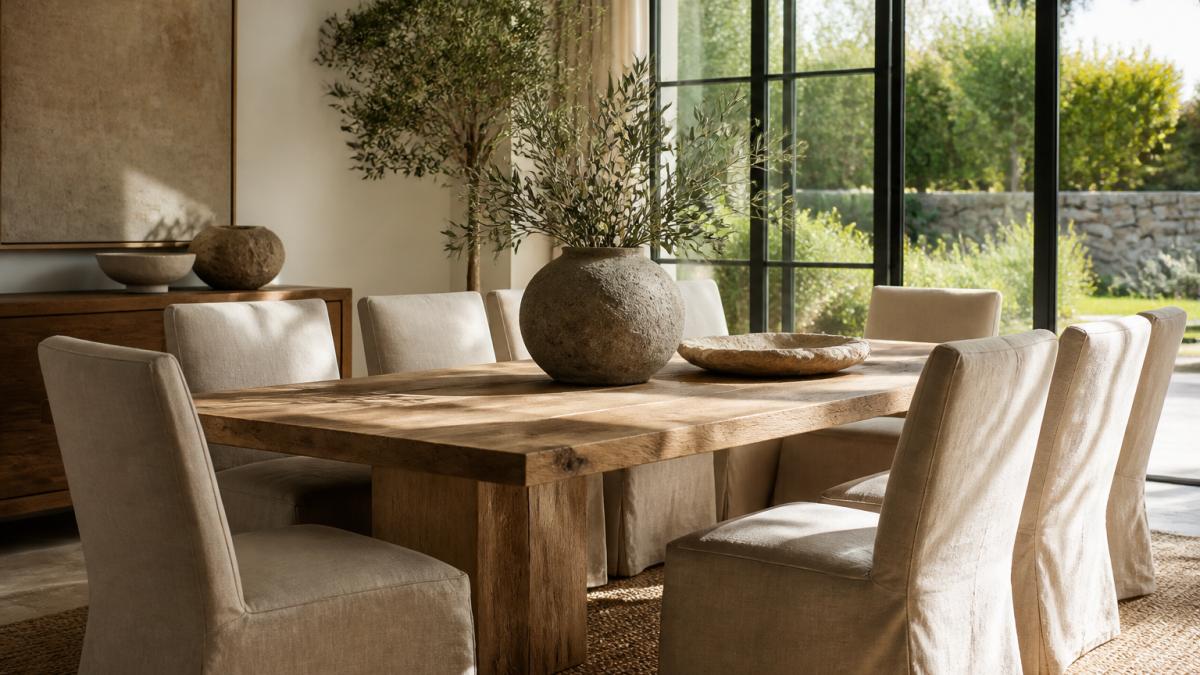
A reliable pairing rule: match warmth to warmth and cool to cool. Warm-toned timber sits naturally with cream limestone and travertine. Cooler grey timbers pair better with darker basalt or slate.
Eco-friendly building materials must be selected for the climate they will live in, not just their environmental credentials. A material that performs beautifully in a temperate zone can fail badly in a tropical or arid one.
Coastal homes face salt-laden air and high humidity, which accelerates corrosion in metal fixings and encourages mould in poorly ventilated cavities. Arid and inland regions swing between extreme heat and cold, stressing timber through expansion and contraction.
Bushfire-prone areas demand the most careful specification of all. Always confirm current requirements against the National Construction Code and your local planning authority before committing to a material, because the rules are updated periodically and vary by jurisdiction.
Termite management is the other regional variable. In high-pressure zones, use naturally resistant timbers or treated products, and keep timber clear of soil contact. For moisture, the fix is usually ventilation and drainage rather than material choice.
| Climate Zone | Primary Risk | Material Response |
|---|---|---|
| Coastal | Salt, humidity, mould | Marine-grade fixings, ventilated cavities |
| Arid and inland | Thermal movement | Stable species, thermal mass, sealed finishes |
| Tropical | Termites, heavy rain | Resistant timbers, drainage, elevated detailing |
| Cool temperate | Heat loss | Stone and masonry thermal mass |
Climate suitability is decided as much by detailing as by material choice. These principles apply across zones and are worth putting to your builder or designer before work begins.
Natural materials increase property value because buyers recognise quality they can touch, and because those materials hold up to inspection years later.
The mechanism is straightforward. Synthetic finishes date visibly and cheaply; natural finishes age into something buyers read as character.
There is a second, quieter effect. Homes built around a connection to nature, with natural light, natural ventilation and materials that reference the outdoors, photograph better and feel calmer in person.
Provenance is the difference between a natural material and a genuinely responsible one.
Here is what we would check before specifying any natural material:
Lead time matters more than most homeowners expect. Natural materials are often made to order, so a custom timber piece may take considerably longer than a stocked synthetic equivalent.
Health and indoor environmental quality belong on this list too. Low-VOC finishes and natural, breathable surfaces contribute to better indoor air, an increasingly common priority for eco-conscious buyers and anyone sensitive to synthetic coatings.
The hardest part of specifying natural materials is not choosing between them. It is knowing which combinations will work in your specific home, climate and light, and being confident enough to commit before you see the finished result.
Oscar and Mila exists to close that gap. Our boutique collection spans designer furniture, lighting, mirrors and decor for interior and exterior spaces, including premium names such as Visual Comfort and Ralph Lauren, so you can source cohesive pieces from one place.
Get started with Oscar and Mila and specify natural materials you will still be proud of in twenty years.
Natural materials bring warmth, tactile richness, and visual appeal that synthetic alternatives struggle to replicate. Timber, stone, and clay age gracefully, developing patina that adds character over time. In luxury homes, these materials also signal craftsmanship and conscientious living. They connect interiors to the outdoors, support biophilic design principles, and often increase property value because eco-conscious buyers recognise their longevity and low maintenance costs compared to cheaper substitutes.
It depends on the material and application. Solid timber and natural stone routinely outlast laminate and vinyl, especially in high-traffic areas. A handcrafted solid mango timber dining table, for example, can be refinished rather than replaced. However, natural materials require appropriate sealing and care for their climate. In bushfire-prone zones, some timbers and stones perform differently than in tropical regions. The key is matching the material to its environment and maintaining it properly.
Timber benefits from regular dusting with a soft cloth and occasional low-gloss lacquer touch-ups. Avoid harsh chemical cleaners that strip finishes. Natural stone should be sealed periodically to resist staining, and spills wiped promptly. In humid climates, ensure adequate ventilation to prevent moisture damage. For outdoor stone pieces, a gentle brush and water usually suffice. Always consult your designer or supplier for product-specific care, since finishes vary between handcrafted pieces.
Yes. Homes featuring genuine timber, stone, and other eco-friendly building materials often command higher prices because buyers associate them with quality, sustainability, and timeless design. Unlike trends that date quickly, natural finishes appeal across demographics. Properties that showcase responsible sourcing and low lifecycle costs attract eco-conscious buyers willing to pay a premium. Even small touches, such as a sandstone sphere set or a solid timber dining table, signal a level of finish that resonates at inspection.
Leave a comment