


Last Updated: August 26, 2026
Getting dimensions right is where most luxury outdoor pottery placements fail. A stunning urn can vanish on a sprawling terrace or dominate a modest courtyard. Scale and proportion determine whether your space feels intentional or cluttered.
A large urn works best when it occupies roughly 15-25% of your visual field from the primary viewing angle (asla.org). Consider your home's architectural scale first: a modest single-storey residence demands different pottery proportions than a two-storey contemporary build. The pottery should echo your architecture's visual weight, not compete with it.
Height relationships matter equally. Eye-level planting, where the urn's top sits roughly at shoulder height, creates the most engaging focal points (asla.org). Taller specimens work for background layering; shorter, wider vessels suit foreground positions.
When selecting from luxury pottery collections like those at Oscar and Mila, pay attention to the proportional relationship between height and diameter. A tall, narrow urn creates elegance and draws the eye upward. A squat, wide vessel grounds a space and suggests stability.
Grouping pottery creates drama that isolated pieces cannot achieve. Three urns arranged thoughtfully become a design statement that elevates your entire outdoor living space.
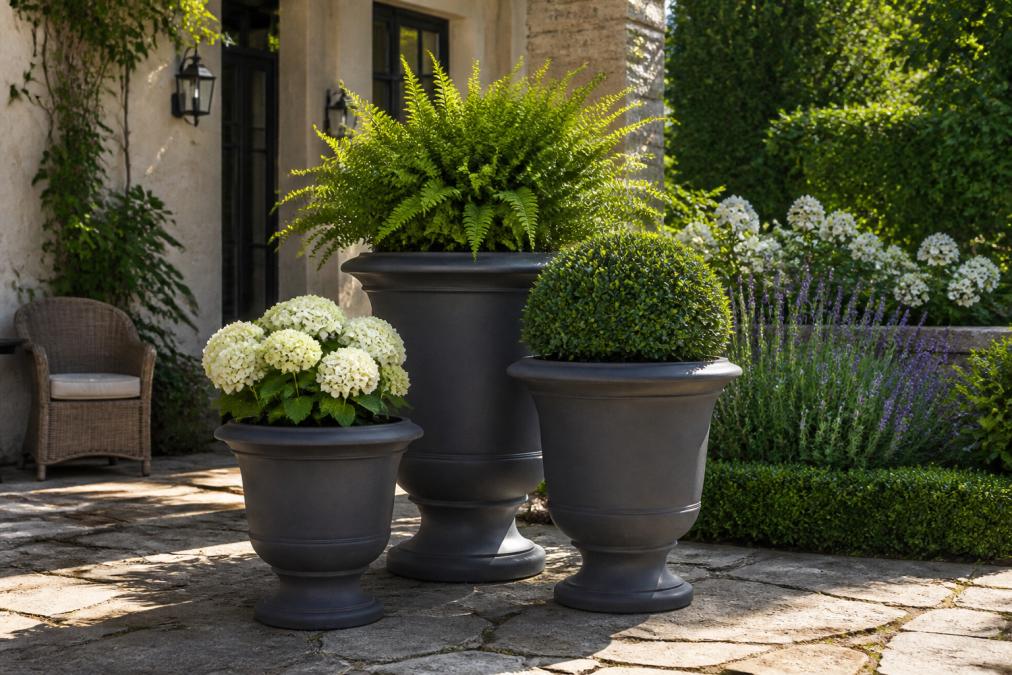
The most effective clusters follow a simple rule: odd numbers work better than even ones. Three, five, or seven vessels create visual rhythm and feel intentional. Vary the heights within your cluster so the tallest piece anchors one side, a medium vessel occupies the centre, and a shorter urn grounds the opposite end.
Pots shouldn't touch, but spacing of 45-60 centimetres between pot edges typically works well (asla.org). Tighter groupings feel intimate; wider spacing suggests a more expansive, contemporary aesthetic.
Symmetrical arrangements, where matching pots flank a central specimen, project formality and classical restraint. This approach works beautifully for traditional architecture and formal entry courtyards. Asymmetrical groupings feel more contemporary and dynamic, varying in size, colour, and sometimes material. When executed well, asymmetrical clusters feel curated and sophisticated.
The choice depends on your architectural style and personal preference. A Mediterranean villa suits symmetry; a modern minimalist home often demands asymmetry.
Negative space, the empty area between and around your pottery, is as important as the objects themselves. Crowding pots creates visual chaos; spacing them too far apart breaks the cluster into isolated elements. Imagine each pot occupies an invisible circle of space around it. These circles should touch or slightly overlap, but not merge. This creates visual connection without cramping.
Large outdoor pots demand specimens that won't look dwarfed or sparse. Structural plants work best as primary specimens: ornamental grasses, architectural foliage plants, or specimen shrubs provide year-round interest. Miscanthus, phormium, and architectural ferns all perform well in large containers.
Specimen trees work beautifully in luxury pottery. A compact Japanese maple, olive tree, or architectural conifer planted in a large urn becomes a destination feature with presence and longevity.
Layering works best when you use one large structural plant as the anchor, then soften the edges with trailing or cascading material. Ivy, trailing sedums, or soft-textured foliage plants spilling over the pot's rim create a polished, intentional look. For seasonal interest, consider adding temporary plantings around your permanent structure without requiring you to replant the entire pot.
Your pottery's colour palette should either complement or intentionally contrast with your surrounding landscape. Neutral tones, terracotta, stone grey, aged limestone, work with almost any planting scheme and feel timeless.
Bold pottery colours demand more careful coordination. Deep charcoal or black urns create dramatic focal points but require equally strong visual anchors: architectural plants, dark foliage, or contrasting light-coloured flowering specimens. Warm terracotta tones work beautifully with Mediterranean plantings, silvery foliage, and white flowers.
The colour palette of your hardscape matters equally. Cool grey stone pairs well with grey pottery; warm terracotta complements warm architectural materials. Consider the foliage texture and colour of your plants as well. Fine, delicate foliage pairs beautifully with sculptural, neutral-coloured pottery. Bold, dark foliage demands pottery with enough visual presence to hold its own.
The most sophisticated homes blur the boundary between interior and exterior spaces. Your outdoor pottery should echo the design language of your interior, creating a seamless visual transition.
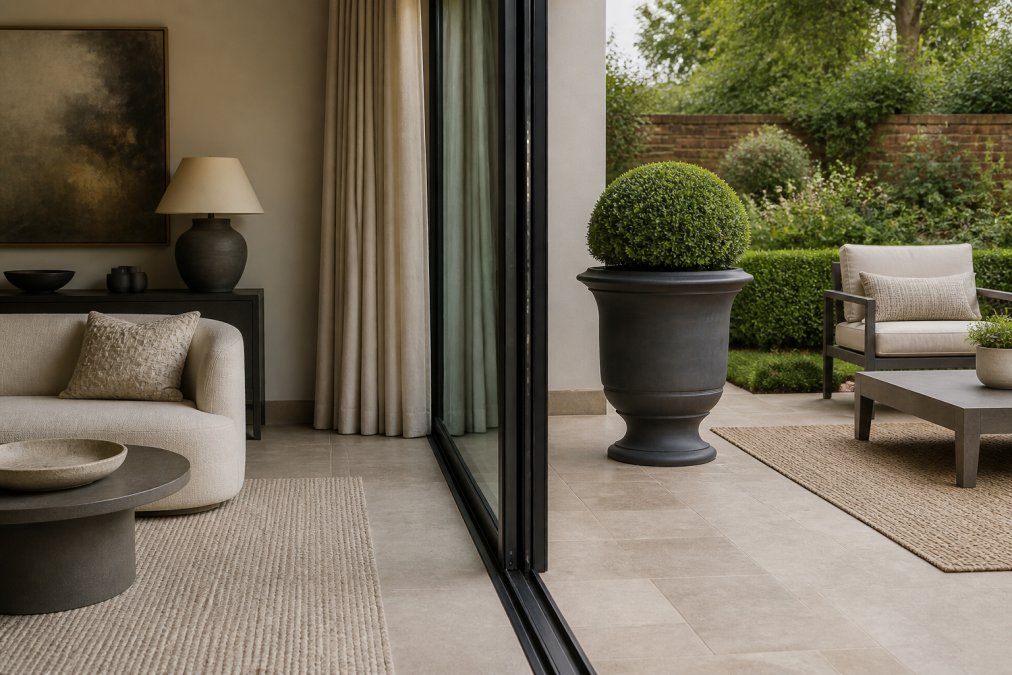
Begin by identifying your interior's dominant colour palette. If your home features warm neutrals, soft greys, and natural materials, your outdoor pottery should echo these tones. Material consistency strengthens cohesion: if your interior emphasises natural materials, timber, stone, and natural fibres, your outdoor pottery should reflect similar values.
Scale relationships matter between indoor and outdoor spaces. Large, dramatic pottery works well if your interior features bold, substantial furnishings. Conversely, a minimalist interior demands similarly restrained outdoor styling.
Styling accessories create surprising cohesion. If your interior features specific decorative objects or plant varieties, echoing these elements outdoors creates a narrative thread. Consider sightlines from your primary interior vantage points. The pottery visible from inside should complement your interior's aesthetic.
Luxury outdoor pottery demands regular care to maintain its appearance and longevity. Ceramic and stoneware vessels need gentle, non-abrasive cleaning. A soft brush with warm water removes most surface dirt. For stubborn algae or mineral deposits, a mild solution of water and white vinegar works effectively. Never use high-pressure cleaners or harsh chemicals.
Frost-proof pottery is designed to withstand freezing conditions, but ensure drainage holes remain clear so water doesn't pool inside and expand during freezing cycles. Empty large pots of excess water before winter. This simple step prevents internal cracking.
UV-resistant glazes protect pottery from sun damage, but even treated surfaces benefit from occasional shade. Seasonal maintenance keeps your pottery looking pristine. Spring cleaning and inspection for cracks prevents small issues from becoming major problems. Autumn cleaning removes leaf debris and prepares vessels for winter weather.
A well-placed pot becomes a destination feature that anchors your outdoor living space. The most effective focal points sit slightly off-centre, visible from primary vantage points but not directly on the central axis.
Architectural interest emerges when pottery interacts with hardscape elements. A tall urn positioned against a textured wall creates shadow play. Grouping pots near steps or transitions between levels creates visual anchors that organise the space.
Repetition of pottery elements creates rhythm that guides movement through your outdoor living space. If you use tall, narrow urns as focal points in one area, echoing this silhouette elsewhere creates visual coherence. Colour repetition works similarly: three pots in matching grey tones scattered across your garden create a thread that ties disparate areas together.
Layering pottery at different depths and heights creates depth perception. Foreground pots appear larger and more immediate; background vessels feel distant and create the illusion of expanded space. Consider sightlines carefully. From your primary seating area, position your most striking pottery where it creates visual interest without obstruction.
The art of styling luxury outdoor pottery lies in understanding proportion, thoughtful placement, and maintenance discipline. When executed well, these pieces elevate your entire outdoor living space, creating a resort-style atmosphere that feels both sophisticated and genuinely lived-in. Oscar and Mila's curated selection of designer pottery, including the Pietro Stoneware Anduze urns available in multiple sizes and finishes, provides the foundation for creating outdoor spaces that reflect refined taste and timeless elegance. Begin with a single statement piece, understand how it interacts with your architecture and landscape, then build from there.

Arrange luxury outdoor pottery using the rule of odd numbers (three, five, or seven pots) in asymmetrical clusters rather than rigid rows. Vary the heights and diameters of your pots to create visual interest and depth. Leave adequate negative space between each pot so they don't appear crowded. Position the tallest or most decorative pot slightly off-centre as your focal point. This approach creates a curated, resort-style aesthetic that feels intentional and sophisticated.
Choose plants with strong foliage texture and architectural form for large outdoor pots: ornamental grasses, structural evergreens like boxwood or photinia, and plants with interesting leaf shapes. Combine upright specimens with trailing or cascading varieties to soften the pot's lines. Select plants suited to your climate and the pot's drainage requirements. Consider year-round interest by choosing plants that maintain visual appeal across seasons, avoiding those that shed entirely or lose colour in winter.
Asymmetrical arrangements typically create a more sophisticated, modern luxury aesthetic. Symmetrical placement suits formal, classical architectural styles. For most contemporary luxury spaces, asymmetry is preferable, it feels curated and dynamic rather than static. However, match your arrangement to your home's architectural style and existing hardscape. A single statement urn placed off-centre is often more impactful than matching pairs positioned symmetrically on either side of an entry.
Clean luxury pottery regularly using non-abrasive methods: soft brushes and mild soap for most finishes, specialist stone cleaners for natural materials. Check drainage holes monthly to prevent waterlogging and root rot. In harsh weather, protective sealants designed for your pot's material extend the finish's durability. Inspect for frost damage after winter, particularly with porous materials. Position pots on stable ground to prevent tipping, and consider moving delicate pieces to sheltered areas during extreme weather. Proper maintenance preserves the aesthetic and structural integrity of your investment.
This article was written using GrandRanker
Leave a comment