


Last Updated: August 27, 2026
When you invest in designer furniture, you're acquiring something intended to last generations. The difference between an authentic heirloom and a convincing fake can be thousands of dollars, more importantly, it's the difference between owning something with genuine provenance and holding an imitation that will depreciate upon discovery.
Counterfeit designer furniture floods the market. Reproductions are marketed as originals, serial numbers are fabricated, and certificates of authenticity are forged with alarming sophistication. For affluent homeowners and interior designers sourcing luxury pieces, this reality demands rigorous verification before purchase.
At Oscar and Mila, we understand that our clients demand absolute certainty about authenticity. This guide walks you through technical and practical methods to verify authentic designer furniture, from physical inspection to digital verification tools and consumer protection frameworks.
Visual inspection is your first line of defence. Experienced collectors develop an eye for authenticity by understanding what separates genuine craftsmanship from mass-produced imitation.
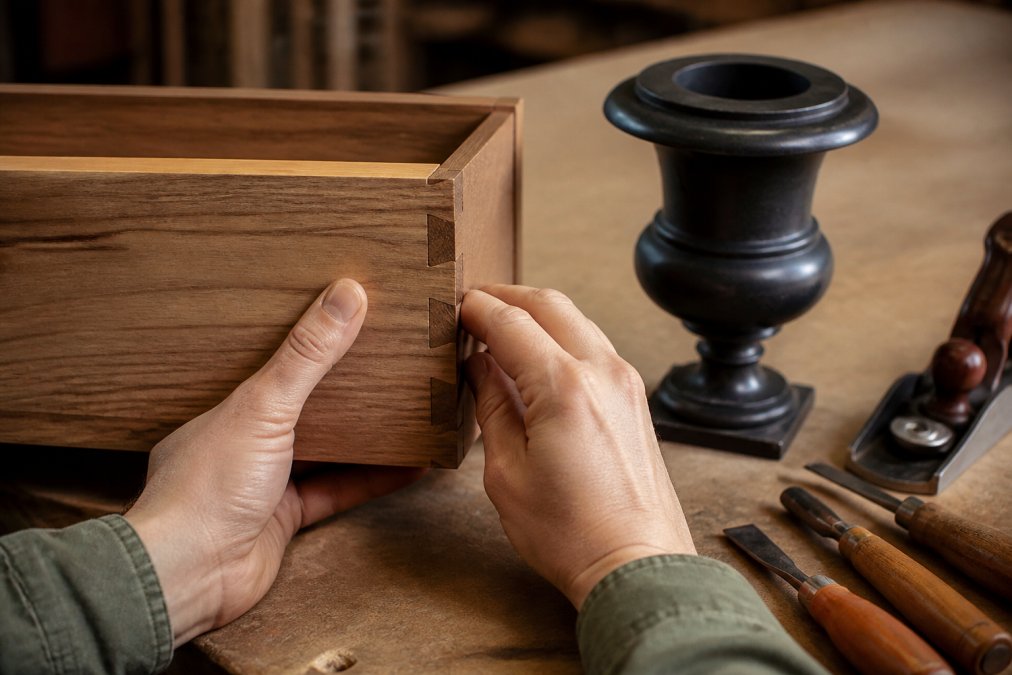
Every authentic designer piece carries identifying marks, stamps, signatures, or labels that verify its origin. Genuine maker's marks are typically found in consistent locations: underneath tables, on the back of chairs, inside drawers, or on the underside of bases. Counterfeiters often place marks in obvious spots; legitimate manufacturers hide them where only a close inspection would reveal them.
Authentic stamps are usually hand-pressed or precision-stamped with consistent depth and clarity. Fake marks often appear shallow, inconsistent, or poorly aligned. Designer signatures should match the designer's actual handwriting or approved facsimile, requiring research into documented signature styles.
The way a piece is constructed reveals authenticity more reliably than any label. Dovetail joinery, used in drawers and case construction, is a primary indicator. Hand-cut dovetails show slight irregularities; each joint is unique. Machine-cut dovetails from authentic manufacturers are precise but show consistent tool marks. Counterfeit pieces often use butt joints or dowel construction instead.
Examine interior surfaces for evidence of age-appropriate construction: hand-planed surfaces with subtle irregularities, period-correct adhesives, and wood showing natural patina. Look at hardware attachment points; authentic pieces show screw holes matching the hardware's age and style.
Material authenticity is non-negotiable. Designers specify particular woods, metals, and textiles for aesthetic, durability, and investment reasons.
Run your hand across the wood surface. Authentic hardwoods used by luxury designers, walnut, rosewood, teak, have distinctive grain patterns and tactile qualities. Veneer should be consistently thick with no bubbling or separation. Solid wood construction should feel substantial; lightweight construction suggests inferior materials.
Authentic brass, bronze, or stainless steel hardware develops specific patina over time. Counterfeit hardware often uses cheaper metals plated to appear authentic, showing wear patterns inconsistent with genuine aging. Test the weight and balance; designer furniture is engineered for durability and should feel solid and well-balanced.
Documentation is your paper trail to authenticity. A genuine certificate of authenticity, combined with supporting paperwork, transforms suspicion into certainty.
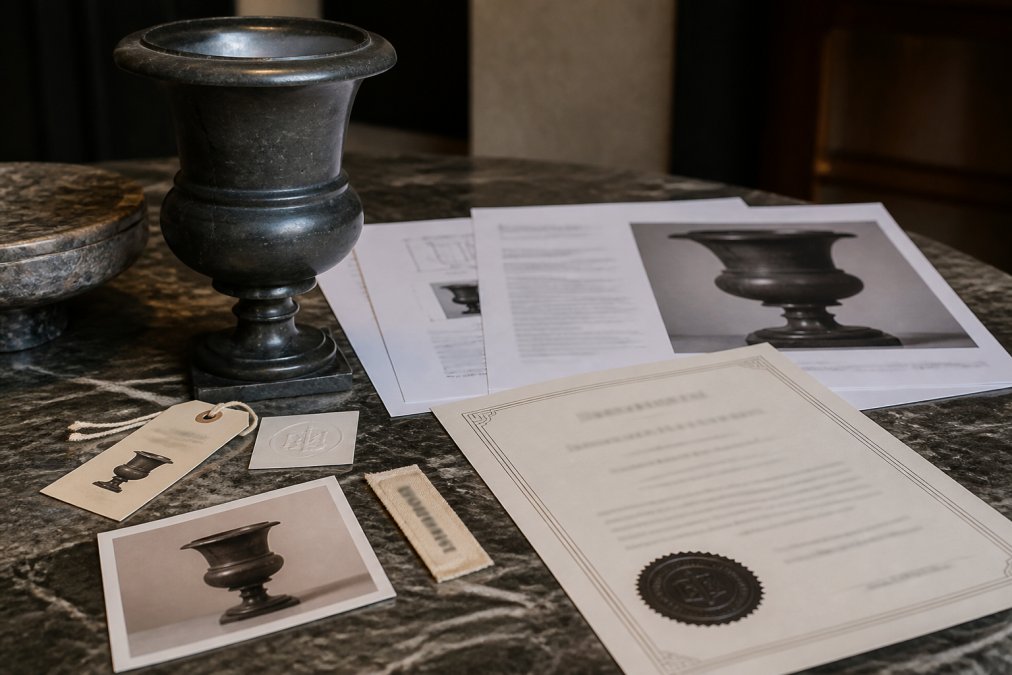
Legitimate certificates of authenticity contain specific information: the designer's name, production date or range, materials used, dimensions, and a unique identifier (serial number or lot number). The certificate should be issued by the designer, manufacturer, or an authorised third-party appraiser.
Original purchase receipts or provenance documentation are invaluable, including the retailer's name, date of purchase, price, and designer details. Designer catalogues or specification sheets add credibility; many heritage designers published detailed catalogues showing production runs, materials, and construction details.
Look for security features on certificates: embossed seals, watermarks, holographic elements, or sequential numbering. Forged certificates often lack these details or show inconsistencies in printing quality, paper stock, or formatting.
Designer signatures follow specific patterns. Some designers signed every piece; others signed only select works. Research your specific designer's signature practices. A signature where none should exist is a red flag.
Serial numbers should be traceable. Contact the manufacturer or designer's archive with the serial number to verify production records. Legitimate manufacturers maintain production databases spanning decades. Cross-reference the serial number format with the designer's known numbering systems; different production periods often used different schemes.
Heirloom quality transcends craftsmanship; it encompasses design philosophy, material longevity, and cultural significance. Heirloom furniture is designed for multi-generational use, with structural integrity surviving decades of use and materials that improve with age.
Design heritage refers to the documented lineage of a designer's work. Pieces from designers with established archives, published histories, and institutional recognition carry inherent heirloom potential. When you can trace a piece to a designer whose work is studied and valued, you're holding something with proven longevity and cultural significance.
Authentic designer furniture appreciates; counterfeit pieces depreciate immediately upon discovery (peer-reviewed research on counterfeit depreciation). This financial reality aligns perfectly with the emotional satisfaction of owning something genuine.
Authentication is systematic. Follow these steps to build an evidence file that confirms or challenges a piece's claimed authenticity.
Begin with the designer themselves. Research their documented body of work, production dates, and known materials. Most heritage designers have published monographs, museum exhibitions, or design archive documentation available online or through design libraries.
Access designer specification sheets if available. Many mid-century and contemporary designers published detailed production specifications showing exactly which woods, hardware, fabrics, and construction methods were used. Check design patent records; designers often patented innovative construction methods or design elements. A design patent provides definitive proof of origin and date.
Study the designer's evolution. Most designers refined their work over time, changing materials, proportions, or construction methods. A piece combining design elements from different periods may be a later reproduction.
Provenance, the documented ownership history of an object, is authentication's strongest evidence. Pieces with clear provenance from original purchase through subsequent owners are far more likely to be authentic.
Request documentation from the seller: original purchase receipts, auction house catalogues, insurance appraisals, or previous owner records. Contact previous owners if possible; auction house records are often accessible and reliable because auction houses have legal liability for misattribution.
Search design archives and museum collections. Many heritage designers' archives are housed in universities or design institutions and often include production records and provenance documentation.
Professional appraisers specialising in designer furniture provide expert authentication. A formal appraisal includes detailed examination, research, and written documentation of authenticity findings. Choose appraisers carefully; look for credentials from recognised organisations and documented experience with your specific designer or era.
Museums and design institutions sometimes offer authentication services. Contact the archives associated with your designer; many provide consultation services for private collectors. Online authentication communities can provide preliminary feedback but treat these as starting points rather than definitive verification.
Technology now offers verification methods unavailable to collectors a decade ago. Spectroscopy and material analysis identify wood species, metal composition, and finish chemistry through non-destructive testing that confirms whether materials match the designer's specifications.
High-resolution imaging and macro photography reveal construction details impossible to see with the naked eye. Document maker's marks, joinery, hardware, and finish with professional-quality photographs; these become part of your authentication record.
Blockchain-based provenance tracking is emerging in the luxury furniture market. Some dealers and auction houses now issue digital certificates tied to blockchain records, creating tamper-proof ownership documentation. Design archive databases are increasingly digitised, making complete catalogues, production records, and specification sheets searchable online.
Under Australian Consumer Law, goods must be of acceptable quality, fit for purpose, and as described (legislation.gov.au). If you purchase a piece represented as authentic designer furniture and later discover it's counterfeit, you have grounds for remedy.
Preserve all communication with the seller, photographs of the piece, certificates of authenticity, and any written descriptions. Request written authentication statements from sellers; don't accept verbal assurances. For high-value purchases, consider having a formal appraisal completed before finalising the transaction.
If you discover a piece is counterfeit after purchase, contact the seller immediately with documentation of the misrepresentation. Many reputable dealers will accept returns or provide compensation rather than face legal action.
Verifying authentic designer furniture requires patience, research, and willingness to examine pieces closely. The investment you make in authentication, time spent researching provenance, cost of professional appraisal, effort in documentation, pays dividends in confidence and long-term value.
At Oscar and Mila, we understand that our clients demand certainty about authenticity. Every piece in our curated collection undergoes rigorous verification before it reaches your home. When you select from our portfolio of designer furniture, lighting, and home decor, including heritage pieces and contemporary works from recognised designers, you're acquiring pieces with documented provenance and verified authenticity. Our commitment to curation means you invest with confidence, knowing your designer pieces are genuine, built to last generations, and worthy of the refined spaces they'll inhabit.
A: Authentic designer pieces should include a certificate of authenticity, designer signature or maker's mark, original purchase receipt or provenance documentation, and care instructions. Serial numbers, design archives, or historical records further verify authenticity. Missing documentation doesn't automatically indicate a reproduction, but legitimate pieces from established designers always have traceable records.
A: Reproductions typically show uniform patina and aging, while originals display varied wear patterns consistent with genuine use. Check for aged hardware with authentic corrosion, original upholstery with period-appropriate materials, and wood grain patterns that match the designer's specifications. Reproductions often have inconsistent craftsmanship details. Research the designer's original production dates and compare construction techniques. Pieces like Oscar and Mila's Marble Medici Vases are clearly identified as reproductions with transparent labelling about their handcrafted nature and aged patina.
A: Counterfeits typically feature poor joinery, machine-made uniformity instead of handcrafted variation, incorrect hardware for the era, misspelled or poorly executed maker's marks, and materials that don't match designer specifications. Examine the base labels carefully, counterfeit pieces often have fuzzy or poorly printed labels. Pricing significantly below market value is a red flag. Legitimate designer furniture commands premium prices because of authentic craftsmanship, material quality, and design heritage. When in doubt, request third-party appraisal documentation.
A: Provenance verification requires researching ownership history, original purchase documentation, and design archives. Contact the designer's studio or manufacturer directly with photographs and specifications. Check for consistent wear patterns that match the claimed age and use history. Third-party appraisers specialising in vintage furniture can authenticate pieces and document their history. Reputable retailers provide transparent provenance information. Building a documented chain of ownership strengthens authentication and increases investment value for heirloom-quality pieces.
This article was written using GrandRanker
Leave a comment