


Last Updated: August 15, 2026
Designers specifying high-end residential furnishings know the challenge well: a client falls in love with a brand's aesthetic, but lead times, price points, or availability make it impractical. At Oscar and Mila, we work with interior designers and discerning homeowners who regularly ask for jardan furniture alternatives that hold the same commitment to craftsmanship, provenance, and timeless design without the constraints. This guide gives you the practical, procurement-focused information that most articles skip entirely.
The landscape for design-led, locally manufactured furnishings has matured considerably. Many designers find that specifying beyond a single brand opens access to better lead times, more flexible customisation, and stronger value at comparable quality tiers.
Below, we cover the criteria that matter when evaluating alternatives, profile Australian-made brands worth specifying, compare budget tiers, and address the trade account and lead time questions that determine whether a piece makes it into a project.
A credible jardan furniture alternative is not simply another piece of upholstered furniture made locally. The standard to match is specific: handcrafted construction, considered materiality, a design language with genuine longevity, and supply chain transparency that lets designers make confident commitments to clients.
Provenance matters for two reasons. The first is quality assurance: knowing where and how a piece is made gives designers a reliable basis for specifying it. The second is the story a piece carries into a residential space.
Artisanal furniture produced in small local workshops typically involves hand-finished timber frames, hand-tied springs, and upholstery applied by trained craftspeople rather than automated lines. These production methods produce measurable differences in durability and finish quality. When evaluating any brand, ask specifically: where is the frame made, what timber species is used, and what quality control process governs upholstery finishing? Brands that deflect or speak only in generalities about "quality craftsmanship" are worth scrutinising more carefully.
The distinction between timeless and trend-driven design is not about being conservative. Modernist and minimalist furniture can be both forward-looking and enduring. The question is whether a piece is designed around a passing aesthetic moment or around proportions, materiality, and ergonomics that will read well in ten years.
Design-led alternatives worth specifying tend to share certain characteristics: restrained ornamentation, high-quality finishes that age gracefully, and silhouettes that work across a range of interior contexts. Bespoke customisation options, particularly in upholstery textiles and timber finishes, extend a piece's relevance by allowing it to be tailored to a specific brief.
The strongest jardan furniture alternatives come from a small cohort of Australian manufacturers who treat local production as a design value, not just a marketing point.
Local manufacturing delivers practical advantages beyond provenance. Shorter supply chains mean designers can visit workshops, inspect production, and specify custom dimensions or finishes that offshore production cannot accommodate. According to the Australian Made Campaign, products carrying the Australian Made certification must meet strict country-of-origin standards, giving designers a verifiable starting point when assessing claims.
Supply chain transparency varies enormously. Some local manufacturers will share material sourcing details, timber species certifications, and upholstery supplier names on request. Others treat this information as proprietary. Transparency is itself a quality signal: if a brand is proud of how it makes things, it will show you. For residential projects, specify brands that can give you a named workshop location, a clear production timeline, and a direct contact for trade queries.
A material sustainability audit of any brand should cover: timber sourcing, foam and upholstery fill specifications, fabric certifications, and finishing products.
Timber is the most consequential variable. Responsibly sourced hardwoods and plantation timbers carry certifications from bodies such as the Forest Stewardship Council, which provides chain-of-custody verification from forest to finished product. Brands that cannot specify their timber provenance represent an unquantifiable environmental and reputational risk for designers working on projects with sustainability briefs.
Upholstery materials carry their own considerations. High-resilience foams, recycled-content wadding, and natural fibre textiles represent more considered choices than standard synthetic alternatives. The best Australian-made alternatives increasingly offer these options as standard or upgrades.
Price positioning for design-led, locally manufactured furniture reflects real production costs. The following matrix maps the landscape across three tiers that designers commonly work within.
| Tier | Typical Product Category | What You're Paying For | Trade Discount Common? |
|---|---|---|---|
| Entry-level investment | Accent chairs, side tables, smaller upholstered pieces | Local assembly, imported components, limited customisation | Rarely |
| Mid-tier investment | Sofas, dining tables, beds, modular seating | Fully local production, some customisation, quality control visits possible | Often |
| High investment | Fully bespoke pieces, large sectionals, statement dining | Artisanal finish, full customisation, dedicated account management | Standard |
The common mistake is treating price as a proxy for quality without interrogating what the price actually covers. Some mid-tier brands produce genuinely superior handcrafted pieces to high-investment brands that have shifted production offshore while maintaining premium pricing. Ask for a production overview, not just a price list. The most defensible specifications are those where you can articulate exactly what the investment delivers: frame construction method, upholstery process, lead time guarantee, and warranty terms.
Lead times are where most furniture specifications either hold together or fall apart. Locally manufactured brands typically range from six weeks for stocked items to twenty weeks or more for fully bespoke pieces.
The practical framework for lead time management comes down to three variables:
Always get a written lead time confirmation at the time of purchase order, and build a buffer of at least two weeks into any client-facing timeline.
High-end furniture trade accounts are the mechanism through which designers access wholesale pricing, priority production scheduling, and dedicated account management not available through retail channels.
Most reputable Australian-made brands offer a formal trade programme. Qualification typically requires evidence of a registered design business, an ABN, and a portfolio demonstrating active residential or commercial project work. The practical benefits of trade accounts extend beyond the discount:
According to the Design Institute of Australia, trade procurement relationships are among the most significant operational advantages available to independent designers. Establishing these accounts before a project requires them is the professional standard.
The most overlooked dimension of specifying jardan furniture alternatives is the role of sculptural lighting in completing a residential brief. Furniture creates the structure of a space; lighting defines its character. A well-specified lighting selection can elevate furniture at a lower price point and create the kind of layered, curated interior that reads as genuinely design-led.
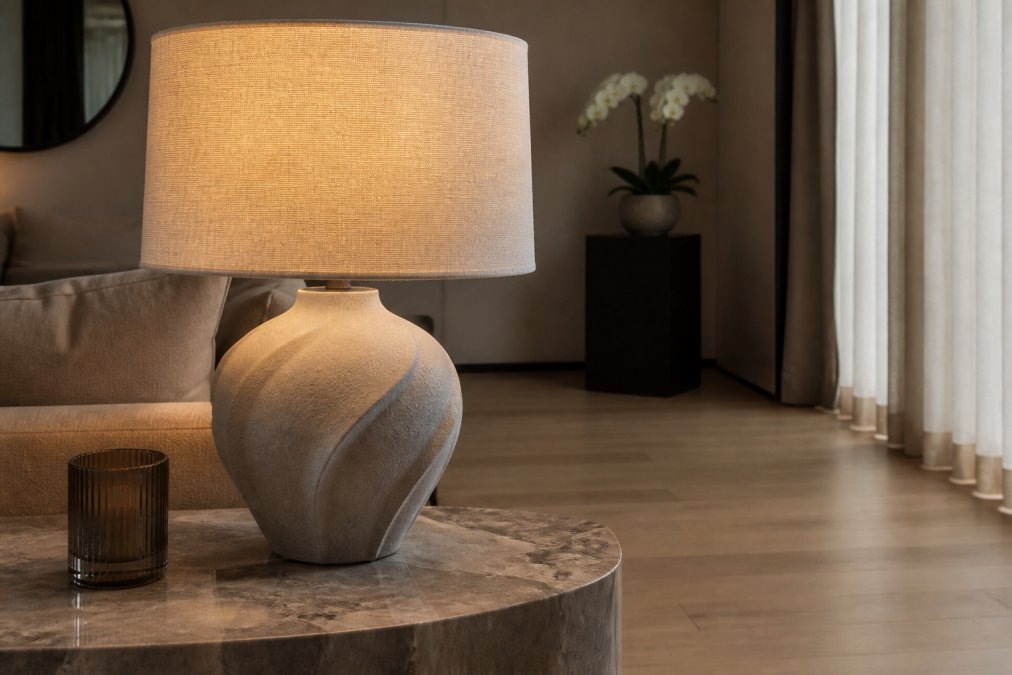
Oscar and Mila's curated selection of Visual Comfort pieces by Kelly Wearstler represents exactly this kind of design-led alternative. These are sculptural objects in their own right, designed with the same attention to materiality and proportion that defines the best furniture.
The Visual Comfort Kelly Wearstler Bayliss Table Lamp at $2,275 is a hand-carved ceramic piece with a fractured motif that functions as a design icon in any residential setting. The Visual Comfort Kelly Wearstler Cleo Table Lamp at $1,025 pairs brass and marble in a geometric form that reads as architectural rather than decorative.


For overhead specification, the Kelly Wearstler Melange Large Floating Disc Chandelier at $4,900 pairs natural alabaster with metal in a simplified form rated for damp locations, making it suitable for covered outdoor living spaces. The Visual Comfort Kelly Wearstler Utopia Large Linear Pendant at $4,650 spans 153cm with organic topographic forms that anchor open-plan living and dining spaces.

Clients respond to lighting at this level of craft with the same enthusiasm they bring to furniture. Lighting is a specification decision, not an afterthought.
The evaluation framework for any jardan furniture alternative comes down to six criteria that apply regardless of brand, price point, or aesthetic.
| Criterion | What to Ask | Red Flag |
|---|---|---|
| Provenance | Where is the piece manufactured? | Vague answers about "quality control" |
| Material transparency | What timber, foam, and fabric specifications apply? | No product information sheets available |
| Lead time reliability | What is the written lead time at point of order? | Only verbal estimates offered |
| Trade programme | Is there a formal trade account with documented benefits? | Discount offered informally without structure |
| Customisation scope | What can be changed, and what does it add to lead time? | All customisation treated as equal complexity |
| Warranty and after-sales | What are the warranty terms and who handles claims? | No written warranty documentation |
The real difference between a specification that holds up and one that creates client problems comes down to documentation. Every criterion above should be answerable in writing before you place an order. If a brand cannot provide written answers, that is not a brand to specify on a high-value residential project.
A practical checklist for trade professionals:
According to Consumer Affairs Victoria's guide to furniture and homewares, consumers and trade buyers have statutory rights under Australian Consumer Law regardless of what a supplier's warranty documentation states. Understanding these rights gives designers a stronger position when resolving post-delivery issues on behalf of clients.
Sourcing the right furniture for a high-end residential brief is never straightforward, particularly when a client's reference point is a single well-known brand. Oscar and Mila's curated selection of Visual Comfort lighting by Kelly Wearstler offers designers a sculptural, design-led complement to any furniture specification, with pieces available across a range of investment tiers and genuine artisanal credentials. Browse the full collection at Oscar and Mila and get started specifying pieces that complete the brief rather than compromise it.
Several local manufacturers produce handcrafted, design-led furnishings with strong provenance and quality control. When evaluating them, prioritise brands that disclose their timber sourcing, offer bespoke upholstery options, and publish realistic lead times. Trade accounts with these makers typically unlock priority scheduling and wholesale pricing, which matters on tight project timelines. The strongest alternatives to Jardan combine local manufacturing with a curated, timeless aesthetic rather than chasing seasonal trends.
Quality varies significantly across the market. The most credible jardan furniture alternatives share a few traits: joinery done in-house or with verified local workshops, upholstery using durable textiles rather than entry-level fabrics, and finishes tested for residential durability. Brands that publish their materiality and manufacturing process openly are generally safer to specify than those relying on lifestyle imagery alone. Always request a sample or visit a showroom before committing to large-quantity orders for a residential project.
Customisation depth differs widely. Some local makers offer full bespoke commissioning, covering dimensions, upholstery textiles, timber species, and finishes. Others offer a curated range of pre-set configurations. For residential projects requiring specific dimensions or client-selected fabrics, confirm customisation scope and the associated lead time extension before specifying. Brands with dedicated trade accounts tend to offer more flexibility on custom orders and are more responsive to designer-driven briefs.
Sustainable procurement starts with verifying timber certification (look for FSC or PEFC-certified sources), upholstery fabric composition, and whether the manufacturer offsets or reduces waste in production. Local production generally means a shorter supply chain and lower transport emissions compared to imported alternatives. Design boutiques with curated selections, including those offering trade accounts, often pre-screen suppliers for sustainability credentials, saving designers the audit work on individual pieces.
Yes, though 'affordable' is relative in the high-end residential segment. The key is understanding what drives the price: local handcrafted production, bespoke upholstery, and longer lead times all add cost. Some design-led brands offer a narrower range at a lower price point without sacrificing materiality or durability. Trade account pricing can reduce the effective cost by 15-30% on qualifying orders, making previously out-of-budget pieces viable for mid-to-upper residential projects.
This article was written using GrandRanker
Leave a comment