


Last Updated: August 31, 2026
The foundation of cohesive indoor outdoor design rests on material continuity. When flooring transitions seamlessly between interior and exterior spaces, it signals intentional design rather than disconnected zones. The visual thread created by consistent materials draws the eye outward and makes smaller properties feel more expansive.
Concrete, porcelain, and natural stone are the primary materials that work across both environments. Polished concrete offers industrial elegance and performs well outdoors when sealed properly, it resists weather while maintaining that refined aesthetic. Porcelain tiles have become the industry standard for seamless transitions because they're available in finishes that mimic natural stone, wood, or terrazzo, yet deliver superior durability against UV exposure and temperature fluctuations. Natural stone like limestone or travertine brings warmth but requires more maintenance outdoors; sealed properly, however, it develops a patina that many designers prefer over time.
The threshold itself matters enormously. Rather than a visible lip or step, consider a flush transition where interior and exterior flooring sit at the same level. This requires careful drainage planning, a subtle slope away from the building ensures water moves away rather than pooling. Many high-end installations use a narrow channel drain or a permeable transition strip that's barely visible but functionally essential.
Wood presents a temptation but demands honesty about climate. Hardwood indoors paired with composite decking outdoors can work visually if the tones match, but the material shift becomes obvious on close inspection. If you want the warmth of wood throughout, commit to either exterior-grade timber (which costs significantly more) or accept that the transition will be visible and design around it intentionally, perhaps as a deliberate threshold that marks the shift from interior to exterior.
Colour cohesion is where most indoor-outdoor projects falter. Interiors typically use deeper, richer palettes, charcoal walls, navy furnishings, warm wood tones. Exteriors demand lighter, more muted tones to withstand sun exposure and prevent visual heaviness. The trick is finding the overlap.
A neutral base, whites, creams, warm greys, or soft taupes, works as your anchor across both spaces. This doesn't mean everything must be beige. Instead, use your neutral as the foundation and layer accent colours that appear in both zones. If your interior features jewel-toned cushions, introduce those same tones in exterior textiles or planters. If your indoor lighting fixtures are brushed gold, repeat that finish in outdoor sconces or hardware.
The psychology of colour extends outdoors. Warm earth tones, terracotta, ochre, soft browns, create intimacy and draw people into the space. Cool tones, soft blues, greens, greys, feel more expansive and calming. Most successful transitions blend both: warm materials (stone, wood tones) with cool accents (blue outdoor cushions, grey-green plantings).
Consider how natural light changes your palette throughout the day. Morning sun casts warm, golden light; midday sun is harsh and neutral; evening light becomes amber and soft. A colour that looks sophisticated at 6 p.m. might feel washed out at noon. Test your colour choices across different times before finalizing selections.
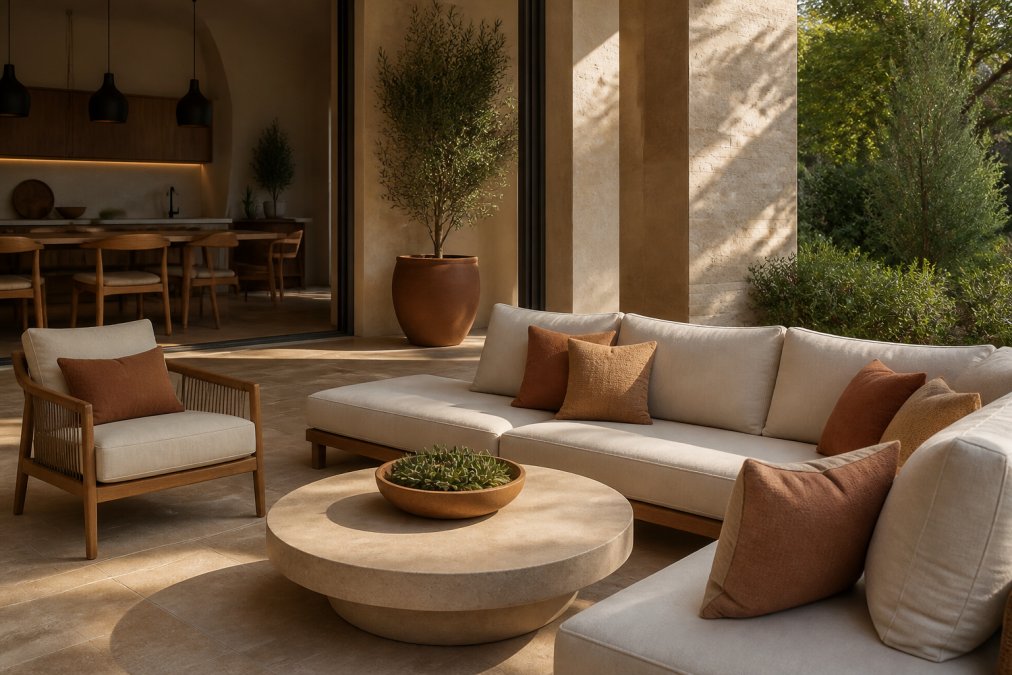
Natural light is the invisible thread that binds interior and exterior spaces. The moment you step outside, your eyes adjust to brightness, if your interior remains dim, the disconnect is jarring. Conversely, if your interior is flooded with light but your exterior seating is shadowed, the flow breaks.
Transparency achieves this connection visually. Floor-to-ceiling glass doors, glass walls, and frameless glass barriers create a psychological continuity even when you're still indoors. You see the outdoor space, the light, the plants, the sky, your brain registers them as part of the same environment. This is biophilic design in its most practical form.
The challenge is balancing transparency with privacy and climate control. Frameless glass is aesthetically superior but costly and requires meticulous maintenance. Framed glass doors offer a cleaner sightline at a fraction of the cost. Sliding glass systems allow you to fully open the threshold on warm days, literally erasing the boundary.
For those without the budget for extensive glazing, strategic placement of smaller windows and openings creates the illusion of connection. A large window positioned to frame your best outdoor view works almost as effectively as a full glass wall, it pulls the exterior into your visual field without the expense.
Natural light also affects material selection. Darker stones and finishes absorb heat and can feel heavy in full sun; lighter materials reflect light and feel airier. If your outdoor space receives intense afternoon sun, lighter flooring and furnishings will feel more inviting than darker alternatives.
Outdoor lighting transforms how people experience the transition from interior to exterior after sunset. Poor lighting creates an abrupt boundary, you step outside and lose visual orientation. Strategic lighting extends the cohesive design into evening hours and makes outdoor spaces feel like a natural extension of your home.
Layered lighting is the principle that works. Ambient lighting (overhead or recessed fixtures) provides general illumination. Task lighting (focused on seating, dining, or pathways) creates function. Accent lighting (on plants, architectural features, or water) adds drama and draws the eye outward from interior spaces.
The colour temperature of outdoor lighting matters as much as indoors. Warm white light (2700K) feels inviting and complements most design schemes (Illuminating Engineering Society). Cool white (4000K) feels clinical outdoors unless you're going for a modern aesthetic. Many high-end installations use dimmable fixtures so you can shift the mood, brighter for entertaining, dimmer for intimate evenings.
Placement is tactical. Uplighting on trees or architectural features creates visual interest and draws the eye outward from windows. Path lighting guides movement and makes transitions feel intentional rather than accidental. Wall-mounted sconces at the same height and spacing as interior fixtures create a visual rhythm that continues outside.
Consider how indoor and outdoor lighting interact at dusk. If your interior is brightly lit while your exterior remains dark, the glass becomes a mirror and you lose the visual connection. Dimming interior lights or brightening exterior lights at sunset maintains the cohesion. Automated systems make this effortless.
Furniture is where indoor-outdoor cohesion becomes tangible. A sofa that matches your interior's style but is built to withstand rain, UV exposure, and temperature swings signals that your outdoor space is as intentional as your indoor design.
The aesthetic challenge is that most outdoor furniture looks distinctly different from indoor pieces. Wicker, rattan, and powder-coated metal dominate the market because they're durable. But they often feel casual or resort-like rather than refined. The solution is choosing outdoor pieces with the same design language as your interiors, clean lines, neutral colours, quality craftsmanship.
High-end outdoor furniture now mimics indoor aesthetics. Powder-coated steel frames with performance fabrics create the silhouette of a modern sofa. Teak or composite materials shaped like mid-century lounges deliver that aesthetic with weather resistance. The California Outdoor Setting from Oscar and Mila exemplifies this, transitional design with modern lines and classic form, hand-woven from recyclable synthetic materials with a galvanised, powder-coated metal frame that prevents corrosion. It looks like a refined indoor piece yet performs flawlessly outdoors.

Fabric choice is critical. Performance fabrics designed for outdoor use now come in sophisticated colours and textures that rival indoor upholstery. Polyester blends resist fading better than natural fibres, and they dry quickly after rain (research on polyester fabric properties). The trade-off is that they don't age as gracefully as leather or linen, they maintain their appearance but lack that patina of use that some prefer.
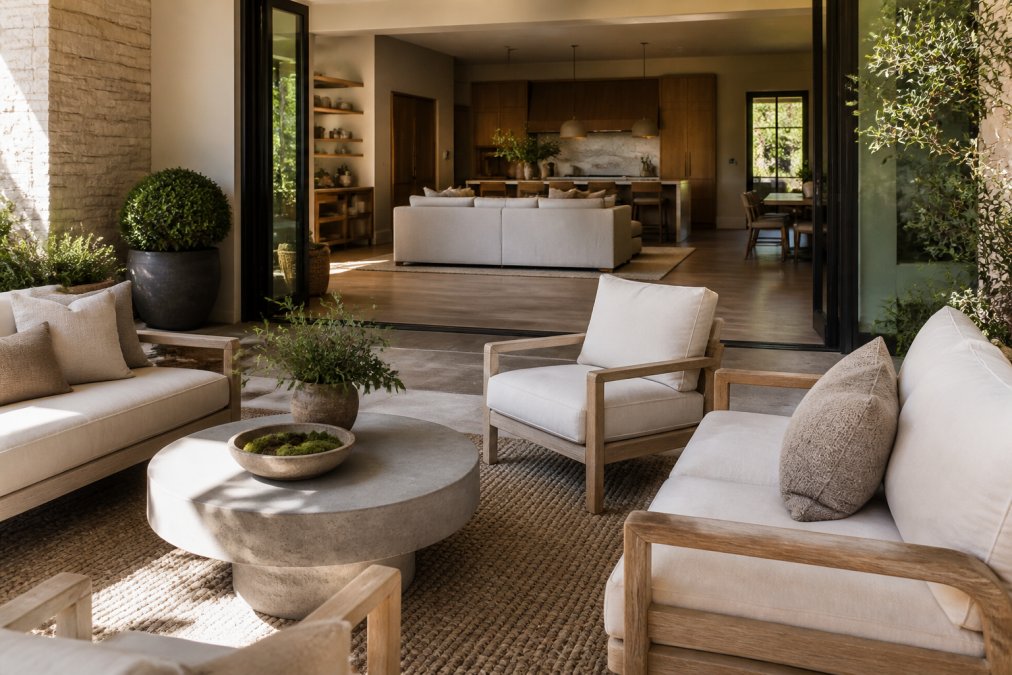
Consider mixing materials strategically. A teak table paired with powder-coated metal chairs and performance-fabric cushions creates visual interest while maintaining cohesion. The Bronte Outdoor Armchair from Oscar and Mila uses aluminium frames with hand-woven recyclable synthetic materials, the natural weave colour and form feel elevated rather than purely functional.
Scale matters. Oversized outdoor furniture can dwarf a space; undersized pieces feel insubstantial. Match the proportions to your indoor furniture so the visual weight feels consistent across the threshold. A low-profile outdoor sofa pairs well with a modern interior; a high-backed lounge suits traditional spaces.
Spatial planning determines whether your indoor-outdoor spaces feel connected or disconnected. The layout should encourage movement between zones rather than treating them as separate rooms.
Consider sightlines first. If your best outdoor view is blocked by a wall or furniture, people won't venture outside. Position seating and openings to frame views. If your outdoor space is visible from your main living area, it becomes part of the interior aesthetic even when you're not using it.
Functional zones bridge the gap. An outdoor dining area directly adjacent to your kitchen creates a natural flow for entertaining. A lounge area visible from your bedroom becomes an extension of that private space. These transitions feel intuitive rather than deliberate.
Scale your outdoor space to match indoor proportions. A sprawling outdoor area attached to a small apartment feels disconnected; a modest seating arrangement in the same space feels intentional. Conversely, a tiny balcony off a large open-plan living area needs thoughtful design to feel substantial.
Traffic flow is underrated. Create clear pathways from interior to exterior. Avoid forcing people to navigate around furniture or step over thresholds awkwardly. A wide, unobstructed threshold, whether it's a sliding glass door or a covered transitional area, makes the journey feel natural.
At Oscar and Mila, we understand that cohesive indoor-outdoor design isn't about matching every piece. It's about creating visual and functional continuity through thoughtful material selection, colour coordination, and spatial planning. Our curated collection of designer furniture and lighting for both interior and exterior spaces makes this easier. Pieces like our French Styled Round Mirror bring refined elegance to outdoor areas, extending your interior aesthetic seamlessly into garden settings.

Greenery is the most powerful connector between interior and exterior spaces. Plants blur the boundary, they soften hard materials, introduce organic shapes, and create visual depth that pulls the eye outward.
Strategic plant placement creates sightlines. Tall plantings frame views, drawing attention to specific outdoor areas. Low plantings near seating don't block views but add texture. Climbing vines on structures create vertical interest and soften architectural lines, making the transition feel more organic than constructed.
Colour and texture matter as much as form. Silvery foliage (like dusty miller or artemisia) echoes cool tones in your palette. Deep greens ground the space. Seasonal bloomers introduce accent colours that complement your design scheme. The goal is to treat plantings as design elements, not afterthoughts.
Potted plants extend the logic of interior décor outdoors. Large sculptural planters near your threshold echo the scale and formality of indoor furnishings. Grouped pots create visual weight and intentionality. The French Styled Rounded Top Mirror from Oscar and Mila, with its antique gold finish, pairs beautifully with terracotta or sculptural planters, the reflective surface amplifies greenery and light.

Container gardening solves the problem of cohesion in small spaces. You control the plants, the soil, the scale, and the arrangement. A collection of matching or complementary planters creates visual rhythm and allows you to adjust the design seasonally.
Maintenance is honest reality. Living walls and extensive plantings require consistent care. If maintenance isn't realistic for your lifestyle, choose hardy, low-maintenance species or accept that your greenery will evolve naturally. A well-maintained, simple planting scheme beats a neglected, ambitious one.
Creating cohesive indoor-outdoor design is fundamentally about intention. Every material, colour, light source, and furniture piece communicates whether your spaces are connected or separate. The best designs feel inevitable, like the interior naturally extends outside, and the exterior naturally flows in.
Oscar and Mila's curated selection of designer furniture, lighting, and mirrors for both interior and exterior spaces makes achieving this cohesion tangible. Whether you're selecting a statement mirror to reflect light and greenery, choosing weather-resistant seating that matches your interior aesthetic, or layering lighting that extends your design language into evening hours, the right pieces transform how your spaces feel and function. Start with material continuity, build through colour coordination, and let light and nature complete the picture.
Create cohesive indoor outdoor design by aligning three core elements: flooring materials (use matching or complementary surfaces), colour palettes (extend your interior scheme outdoors), and furniture style (choose pieces that reflect your interior aesthetic). Visual transparency through glass doors and unobstructed sightlines strengthens the connection. Consistent lighting design, from interior to exterior, ensures the spaces feel unified at all hours. The goal is spatial harmony where moving between zones feels intentional, not jarring.
Material continuity is essential. Consider polished concrete, natural stone, or large-format porcelain tiles that work both indoors and outdoors, these create visual unity without interruption. If using different materials, choose complementary finishes and colours that bridge the threshold. Outdoor rugs can soften transitions on patios whilst maintaining the colour palette. Ensure outdoor flooring is slip-resistant and weather-resistant. The key is avoiding jarring contrasts at the threshold; instead, create a gradual, cohesive visual journey.
Use ambient lighting outdoors that mirrors your interior scheme, warm, dimmable lights create continuity. Layer outdoor lighting with task lighting near seating and accent lighting on architectural features. Ensure outdoor fixtures complement your interior style; if your interior features elegant sconces and chandeliers, select outdoor lighting with similar design language. Transition lighting (such as soft uplighting on plants or architectural features) guides the eye smoothly from indoors to outdoors, extending the visual space and reinforcing cohesive design.
Select outdoor furniture that echoes your interior design aesthetic, whether that's modern, transitional, or classic. Look for pieces with similar proportions, materials, and colour palettes. High-end outdoor furniture brands now offer designs that mirror interior collections. Consider texture and finish: if your interior features natural wood and metal, choose outdoor pieces with complementary materials. Premium outdoor furniture, like the California Outdoor Setting or Bronte Armchair, are engineered from recyclable synthetic materials and powder-coated frames that maintain aesthetic consistency whilst withstanding weather.
This article was written using GrandRanker
Leave a comment