


Last Updated: September 9, 2026
The era of conspicuous consumption in interior design is over. Luxury in 2026 is no longer about displaying wealth through obvious logos or ostentatious finishes; it is about curating a home that reflects soul, character, and considered living. This shift toward quiet luxury and minimalist elegance represents a fundamental change in how we define high-end spaces, favouring personal narrative over showmanship. Our curated collections reflect a move toward pieces that offer refined comfort and timeless design. This guide to the modern luxury interior design trends 2026 explores how to build a home that feels both deeply personal and impeccably crafted.
TL;DR:
The most significant shift in modern luxury interior design trends 2026 is the rejection of the sterile, showroom-perfect aesthetic. Homeowners and designers alike are gravitating toward spaces that feel lived-in, warm, and authentic. This movement champions bespoke elements, natural materials, and a palpable sense of history. The focus is on creating a home that whispers rather than shouts, prioritising the tactile pleasure of hand-applied finishes and the visual depth of layered interiors. This approach values design longevity and the creation of curated spaces that tell a story.
Lighting has transcended its functional role to become the defining sculptural furniture element of the modern interior. In 2026, the light fixture is the artwork, the centrepiece around which a room's entire spatial flow is arranged. We are seeing a strong preference for statement pieces that use natural materials, such as alabaster, to create a soft, diffused glow that enhances the room's atmosphere.
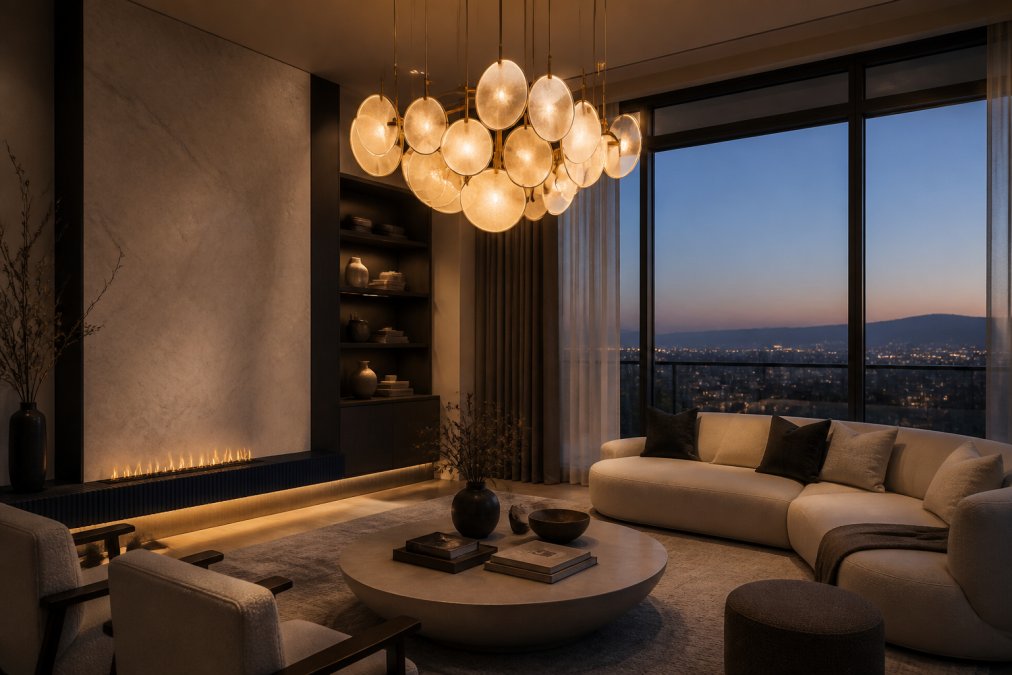
The Kelly Wearstler Melange Large Floating Disc Chandelier is a prime example of this trend. It pairs natural alabaster with sleek metal to form a simplified geometric form, exuding modern refinement while emphasising the beauty of natural stone. For a different take on sculptural form, the Visual Comfort AERIN Benit Sculpted Chandelier uses a plaster white finish and graceful lines to bring a sense of coastal calm and refined silhouette to a space. These are not just light sources; they are the anchors of the room's visual character.

The dominance of stark, cool white is fading, replaced by a sophisticated palette of warm neutrals and earthy tones. These colours, ranging from creamy ivories and soft greiges to deep terracottas and rich clay browns, create a sense of enclosure and comfort that stark palettes cannot achieve. This shift is rooted in a desire for spaces that feel nurturing and connected to the natural world. The psychology of colour here is key; these hues are proven to foster a sense of calm and well-being, making a home feel like a true sanctuary. Tonal palettes, where various shades of the same colour family are layered together, are a hallmark of this trend, creating depth and sophistication without the need for harsh contrast.
Sustainability in luxury furniture has moved beyond a marketing badge to a material and structural commitment. In 2026, the discerning Australian buyer is asking harder questions: Where was this timber harvested? What adhesive holds the veneer? Can this piece be repaired in twenty years, or is it destined for landfill? The answers separate genuine heirloom pieces from greenwashed imports.
Not all 'sustainable' materials carry equal weight. The current hierarchy in high-end Australian furniture favours, in order of preference:
A piece of furniture that lasts forty years has a fraction of the environmental impact of four pieces that last ten years each. This is the core arithmetic of sustainable luxury. When evaluating a piece, look beyond the surface finish to the joinery. Mortise-and-tenon joints, dovetail drawers, and screwed (rather than stapled) upholstery frames signal a piece designed for disassembly and repair. The Black Ash Oval Dining Table exemplifies this principle, its solid timber construction and robust joinery mean it can be refinished multiple times over its life, unlike veneered particleboard alternatives that degrade after a single sanding.
Australian conditions, intense UV exposure, humidity swings between coastal and inland regions, and the prevalence of timber pests in northern areas, demand specific material choices. Sustainably sourced hardwoods like jarrah and blackbutt naturally resist termite attack without chemical treatment, making them a pragmatic choice for longevity (csiro.au). Softwoods like radiata pine, even when certified sustainable, often require heavy chemical preservatives to survive Australian conditions, undermining their environmental credentials.
When considering sustainable luxury furniture, it is advisable to ask suppliers these four questions:
A supplier who cannot answer these questions is likely prioritising aesthetics over genuine sustainability. The Buffet Side Board, with its grained oak veneer over a solid timber frame, represents a middle path, veneer on visible surfaces reduces timber consumption while the solid frame ensures structural longevity. This hybrid approach is becoming the pragmatic standard for sustainable luxury, balancing material efficiency with the visual richness that solid timber provides.
Biophilic design is a defining feature of modern luxury interior design trends 2026, driven by our innate need to connect with nature. This goes beyond simply adding a potted plant. It is about incorporating organic textures and raw finishes throughout the home to create a multisensory experience. Think hand-trowelled plaster walls, raw silk upholstery, and the cool, tactile surface of natural stone. The Contemporary Marble Dining Table, with its natural Vitoria marble top and brass base, perfectly embodies this principle, bringing the timeless elegance of geological formations into the dining room. These materials age gracefully, developing a patina that adds to their charm and reinforces the concept of design longevity.
Beyond the single statement chandelier, high-end lighting trends 2026 are all about a layered, architectural approach. This strategy involves using multiple light sources at different heights to create depth, define zones, and control the mood of a room. Ambient lighting from a central fixture is complemented by task lighting for specific activities and accent lighting to highlight architectural details or artwork. The Visual Comfort AERIN Clarkson Floor Lamp is a perfect example of a piece that provides both function and form, its black and brass frame adding a sculptural element to a reading corner. Similarly, the Visual Comfort Aerin Montreuil Floor Lamp, with its four linen shades, offers a soft, diffused light that washes over a space, creating a sophisticated glow. This layering allows for complete control over the room's atmosphere, from bright and functional to intimate and subdued.

The curated space is the ultimate expression of modern luxury, moving away from a matching furniture set towards a collected aesthetic that appears to have been assembled over time. This interior styling approach values pieces with a story, a unique provenance, or an artisanal craftsmanship that sets them apart. It is about creating a home that feels unique to its owner, a personal gallery of objects and furniture that reflect their travels and tastes. The Visual Comfort Kelly Wearstler Cleo Table Lamp, with its dramatic mix of metals and geometric forms, is the kind of piece that adds a layer of architectural interest to a curated vignette. The goal is not perfection, but a harmonious blend of materials, eras, and styles that creates a space with genuine visual character and refined comfort.

The Australian outdoor room is no longer an afterthought furnished with cast-offs from the indoor living area. Premium outdoor living trends 2026 treat the exterior as a full design commission, with the same attention to material selection, lighting layering, and spatial flow as any interior space. The challenge is that Australian conditions, harsh UV, salt-laden coastal air, and dramatic temperature swings, punish materials that cannot perform.
The single biggest mistake in outdoor luxury is specifying indoor materials outdoors. The material hierarchy for Australian outdoor spaces in 2026 is clear:
For structural frames:
For upholstery:
For surfaces:
The most significant shift in premium outdoor design is the elimination of the visual threshold between inside and outside. This goes beyond stacking doors. It means:
Australian climate diversity demands different outdoor strategies. In the tropical north, the priority is airflow, high ceilings, ceiling fans rated for outdoor use, and furniture that dries quickly after rain. In the temperate south, the priority shifts to heat retention, outdoor fireplaces, infrared patio heaters, and upholstery that can handle damp winter conditions. In arid inland regions, UV protection and dust resistance become the dominant concerns.
When planning an outdoor budget, a common allocation strategy prioritises elements in this order:
This hierarchy ensures that the money goes into elements that deliver long-term value rather than disposable decor. The premium outdoor space in 2026 is not about filling a patio with furniture, it is about creating a genuinely usable, climate-appropriate extension of the home that performs for decades.
The defining trends for 2026 focus on quiet luxury and timeless design rather than fleeting fads. Key movements include sculptural furniture and lighting as focal points, warm neutral and tonal palettes, natural materials like stone and timber, and a strong emphasis on biophilic design. The overall direction is toward curated, layered interiors that prioritize craftsmanship and longevity over trends, creating spaces that feel personal and refined.
Modern luxury in 2026 is evolving away from ostentatious displays of wealth toward a more understated, personal aesthetic. The focus is on quality materials, bespoke elements, and artisanal craftsmanship that tell a story. This shift means investing in fewer, higher-quality statement pieces that offer design longevity, rather than filling a space with many items. The result is a home that feels collected and intentional, not staged.
Lighting is the most critical element in 2026 luxury design, acting as both a functional necessity and a sculptural art form. High-end lighting trends 2026 features architectural pieces that serve as the room's focal point, such as a chandelier with natural alabaster shades. Layered ambient lighting is used to create depth and highlight the texture of materials, while smart home integration allows for effortless control of the mood and atmosphere.
Minimalism is still relevant, but it has evolved into what many call quiet luxury or warm minimalism. The cold, stark minimalism of the past is gone. In 2026, minimalist luxury is about restraint and curation, featuring a few high-quality, functional pieces in a space filled with natural light and organic textures. It prioritizes materiality and spatial flow, creating a calm and refined environment without feeling empty or impersonal.
Leave a comment