


Last Updated: September 4, 2026
A lead time is the period between placing your order and the piece arriving at your door, but for luxury furniture, luxury furniture lead times explained 2026 tells a more layered story. It encompasses design approval, material procurement, the physical production cycle, and international shipping transit time. Understanding this full chain is the difference between a seamless renovation and a stressful one.
Most buyers discover that the quoted delivery window is not a single number but a sequence of milestones. When you order a bespoke piece, the clock starts at design approval, not at checkout. This distinction matters because it shifts your expectations from "when will it ship" to "when will it be made."
The reality is that premium furniture is rarely sitting in a warehouse. It is crafted to order, which means the lead time reflects genuine labour, not logistics delays. Below, we'll show you exactly how to plan around these timelines, what factors stretch them, and how to protect your project from the most common scheduling pitfalls.
Several variables determine how long you wait, and understanding them helps you ask the right questions before you commit. The most significant factors affecting furniture manufacturing lead times include the complexity of the design, the availability of materials, and the current production schedule of the maker.
The single biggest variable is often raw material availability. Natural materials like alabaster, marble, and specific timber species are quarried or harvested in limited batches. When a maker runs out of a particular veined stone or a specific brass finish, the next procurement cycle can add weeks to your timeline.
Luxury furniture lead times are frequently dictated by these sourcing windows. A common mistake is assuming that a premium price guarantees immediate access to materials. In practice, the most desirable materials are often the slowest to replenish.
Before any crafting begins, you must approve the final design. For custom orders, this stage involves reviewing dimensions, finishes, and sometimes physical samples. Delays here are almost always human: slow email responses, indecision on finishes, or waiting for a partner's opinion.
Production scheduling also plays a role. Makers operate in batches, and your order joins a queue. If you approve your design just after a batch closes, you may wait for the next production cycle to begin. This is where project management discipline on your side pays dividends.
Artisanal craftsmanship cannot be rushed. A hand-applied lacquer finish requires drying time between coats. A hand-sewn upholstery seam takes the hours it takes. Quality control checks, often performed at multiple stages, add days but prevent costly defects later.

This is the trade-off at the heart of heirloom quality furniture investment: you are paying for time as much as materials. Understanding this reframes the wait from an inconvenience to a hallmark of authenticity.
The distinction between bespoke furniture delivery timelines and ready-to-ship stock is the most important planning consideration you will face. A ready-to-ship item is already made, inspected, and packaged. Its lead time is essentially shipping transit time plus a short handling window, often one to three weeks domestically (in line with consumer protection guidelines).
Bespoke furniture delivery timelines, by contrast, start at zero. A fully custom piece can take anywhere from eight to sixteen weeks or longer, depending on the maker's queue and the complexity of the design (peer-reviewed research on manufacturing timelines). Neither timeline is wrong, but they serve different purposes.
For a renovation with a hard completion date, ready-to-ship pieces offer certainty. For a project where the design is the priority, bespoke is worth the wait. The key is knowing which you are buying before you pay.
| Order Type | Typical Timeline | Best For | Risk Level |
|---|---|---|---|
| Ready-to-ship | 1-3 weeks | Fixed renovation deadlines | Low |
| Semi-custom | 4-8 weeks | Modified finishes, standard frames | Medium |
| Fully bespoke | 8-16+ weeks | Unique designs, heirloom pieces | Higher |
Heirloom quality furniture investment is not just about aesthetics; it is about construction methods that take time. A piece built to last generations uses joinery that is cut and fitted by hand, not stapled. Finishes are layered and buffed over days, not sprayed and dried in an hour.
This is where the 'Slow Living' movement collides with consumer impatience. The same market that values authenticity and sustainability in food and fashion often struggles to accept that true craftsmanship cannot be expedited. You cannot compress a six-week curing process into one week without sacrificing the result.
When you order from a maker committed to these standards, the lead time is a signal of quality. It means the piece is not coming off a high-volume line. It means someone with years of training is spending days on your furniture. That is worth planning for.
Successful luxury furniture projects treat lead times as a project management exercise, not a shopping event. The process starts with your completion date, not the product page. Work backwards from when you need the room finished, then subtract the longest lead time in your order list.
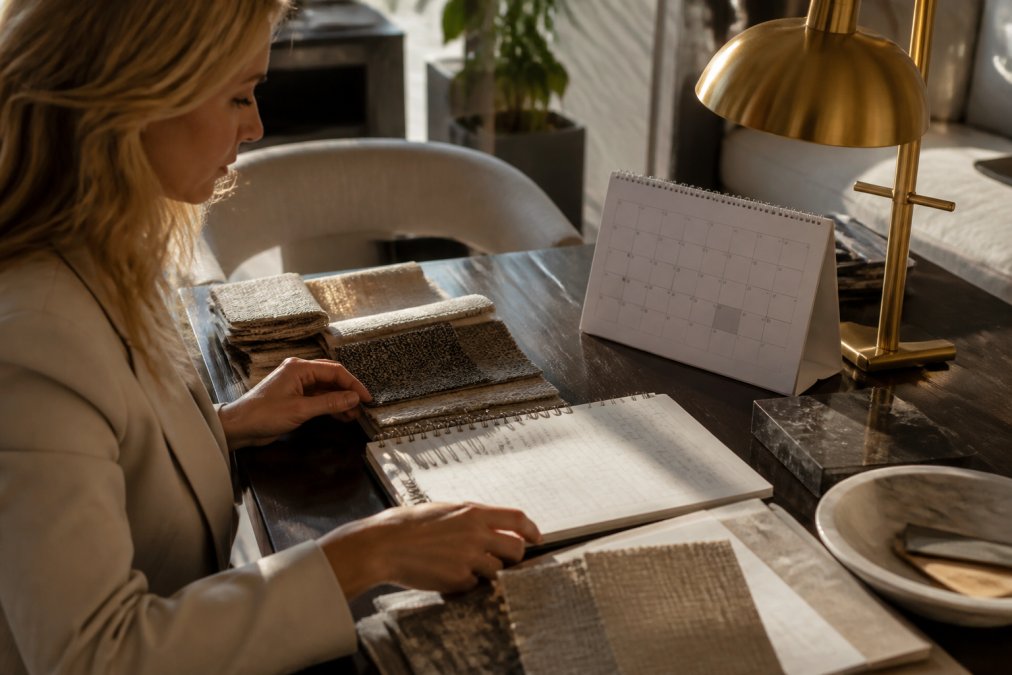
List every piece you need and its estimated delivery window. Identify the item with the longest timeline; that piece dictates your order date. If you are renovating, remember that furniture delivery should align with construction finishing, not starting. Ordering a chandelier the week your builders arrive is a recipe for storage costs and potential damage.
A practical rule is to place custom orders first, then fill gaps with ready-to-ship items closer to your deadline.
Shipping transit time is the most unpredictable element. International freight faces port congestion, customs clearance, and occasionally weather delays (Australian Border Force information on customs clearance). Importation delays are outside any retailer's control, so a buffer of two to three weeks beyond the quoted delivery window is prudent.
The financial implications of ignoring buffer time are real. Rushed shipping costs more, temporary accommodation while you wait for furniture costs more, and making decisions under time pressure rarely ends well. Planning for the delay is cheaper than reacting to it.
The modern expectation is visibility, and supply chain transparency has become a competitive differentiator in luxury retail. However, not all tracking is equal, and knowing what milestones to demand, and what happens if timelines slip, is essential consumer protection.
A reputable retailer should provide updates at each of these stages, with dates:
If a retailer cannot or will not provide these milestones, that is a red flag. It suggests they do not have visibility into their own supply chain, or they are deliberately withholding information.
A content gap that most guides ignore: what happens to your money and your order if a lead time extends beyond the original estimate? This is where the contract terms matter.
Before placing a large order, clarify the following in writing:
These terms are not negotiable for every retailer, but they are worth asking about. A luxury retailer that treats these conversations as normal is one that has experience managing complex orders and protecting customer interests.
The moment your order is placed, communication becomes the product. A clear delivery window, honestly communicated, prevents most disappointment. If a delay occurs, you should hear about it before you have to ask, ideally with an explanation and a revised timeline.
Set expectations upfront: Ask your retailer how often you will hear from them. Weekly? Bi-weekly? Only at major milestones? A retailer that commits to a communication schedule and keeps it is one that respects your project timeline. A retailer that goes silent for weeks and then sends a vague "still in progress" message is one that is managing uncertainty rather than managing timelines.
If something arrives damaged, the resolution process should be straightforward: clear photography requirements, a prompt replacement plan, and clarity on whether the replacement is expedited or subject to the original lead time. A serious retailer will have a damage protocol in place and will execute it without friction.
The moment your order is placed, communication becomes the product. A clear delivery window, honestly communicated, prevents most disappointment. If a delay occurs, you should hear about it before you have to ask.
This is where the luxury retail standards of a curated boutique differ from mass-market sellers. A dedicated contact who knows your order, responds quickly, and resolves issues without friction is the hallmark of a serious retailer. If something arrives damaged, the resolution process should be straightforward, with clear photography requirements and a prompt replacement plan.
Luxury furniture lead times are not an obstacle to work around; they are a schedule to plan with. By understanding the factors that stretch timelines, distinguishing bespoke from ready-to-ship, and building buffer into your project plan, you protect your renovation from unnecessary stress.
The challenge is finding a partner who manages these timelines with the same care they apply to curation. At Oscar and Mila, our boutique collection of designer furniture, lighting, and decor is selected for timeless elegance and impeccable craftsmanship, with clear communication at every step. Explore our curated range and plan your next project with confidence.
Get started with Oscar and Mila and bring enduring design into your home.
Bespoke furniture delivery timelines typically range from 8 to 16 weeks, depending on material sourcing, design complexity, and manufacturing capacity. Custom pieces from premium makers often extend beyond 12 weeks. Some artisanal pieces, particularly those using rare materials or requiring handcrafted details, may reach 20 weeks or longer. Always confirm the estimated time of arrival with your retailer before committing to a purchase, especially if your project has a fixed completion date.
Luxury furniture prioritises quality control, artisanal craftsmanship, and material procurement over speed. Bespoke pieces are manufactured to order, not from stock, which requires custom production scheduling. Premium materials often need sourcing from specialised suppliers globally, adding weeks to the timeline. Handcrafted elements, design approval processes, and rigorous quality checks, hallmarks of heirloom quality furniture investment, cannot be rushed without compromising the final product's integrity and longevity.
Expediting is possible but limited. Some manufacturers offer rush production for an additional fee, typically 15-25% of the piece's cost, though availability depends on current manufacturing capacity. Expedited shipping can reduce transit time by 1-2 weeks. However, the production cycle itself cannot be significantly compressed without sacrificing quality control. If you need pieces urgently, consider ready-to-ship options from curated retailers, though these offer less customisation and may not align with your specific design vision.
Start by identifying your target completion date, then work backwards 16-20 weeks to determine when you must place orders. Prioritise long-lead items like bespoke furniture and custom lighting first, items like the Visual Comfort Anne-Marie Barton Armise 14" Sconce (due May 2026) or Visual Comfort Anne-Marie Barton Marcell 56" Linear Chandelier (due May 2026) require advance ordering. Build in 2-4 weeks of buffer time for logistics delays, customs clearance if importing, and final installation. Coordinate with your designer or architect to confirm all specifications before ordering, as design changes mid-production can extend timelines further.
This article was written using GrandRanker
Leave a comment